
Chanel Classic Flap vs 2.55 Reissue: What Actually Differs
Reviewed by Miss Jay-Ann
The Chanel Classic Flap and 2.55 Reissue are often discussed as if the name alone settles the decision. A better comparison looks at the exact configuration, carrying feel, visual language, condition, and how the bag fits the wardrobe you actually use.
Quick answer
Compare the exact chain, closure, structure, material, size, color, hardware, and condition rather than relying on shorthand. Choose the one whose details you understand and whose carrying rhythm you will enjoy, not simply the one that sounds more iconic.
What the decision is really about
Translate the question into evidence: the exact item, the role it must serve, and the uncertainty that would change your mind. A recommendation is guidance, not a guarantee. Details that vary by edition or listing belong to the current product record, not a generalized article claim.
Names are not complete specifications
Model families contain variations across editions, sizes, materials, colors, hardware, and years. Treat a title as a starting identity, then confirm the exact listing photographs and description. Do not infer a full configuration from a generic internet comparison.
Visual language
The two directions can communicate different levels of polish, vintage character, and everyday formality. Those are editorial interpretations, not fixed brand rules. Compare the bag against your wardrobe colors, jewelry, shoes, and the settings where you intend to carry it.
Chain, closure, and access
Small mechanical details shape daily satisfaction. Test how the chain sits, how the closure opens, whether the bag stays comfortable on your shoulder, and how quickly you can reach essentials. These details should be checked on the exact piece.
Condition and material tolerance
The same model name can wear differently depending on material, use, storage, and treatment history. Inspect corners, quilting or surface, hardware, interior, odor, and shape. A condition description is not a substitute for clear close-ups.
Buying for use rather than shorthand
A first icon should still earn its place in your life. If one option matches your actual use and the other only matches an imagined collection, the practical fit is meaningful evidence.
| Question | Option A | Option B |
|---|---|---|
| Use case | Edited carry and lighter role | Balanced everyday or larger role |
| Capacity | Confirm exact measurements on the listing | Confirm exact measurements on the listing |
| Decision | Choose smaller when you use fewer essentials | Choose larger only when added capacity is used often |
A disciplined decision process
A useful decision can be explained in a few sentences: what you wanted the item to do, what evidence you checked, what compromise you accepted, and what would have changed your mind. This makes the process more resilient to pressure. It also helps when you compare a new listing with something already in your collection. Keep the conclusion proportional to the evidence. If you know the exact condition and role, make a clear choice. If you do not, make the next evidence-gathering step clear instead of pretending the uncertainty is gone.
What not to infer
Do not infer a universal rule from one photograph, one sale, one color, one influencer opinion, or one difficult ownership day. Luxury goods vary by exact construction, condition, storage, market, and use. A current Purse Maison listing is an item-level record and can support a practical inspection; it does not prove every version of a model or a future outcome. Use the article as a decision framework, then confirm the details that matter on the exact product and current official guidance.
Evidence worth saving
Before you decide, save the exact listing URL, the photographs you relied on, the condition questions you asked, and the answers you received. A clear record protects the reasoning even when availability changes. Separate what you saw directly from what you inferred. If a point would materially change your decision, keep it open rather than filling the gap with a general internet claim. The goal is not to create a perfect archive; it is to make the important parts of the decision auditable and easier to revisit.
Compare like with like
Comparisons become less useful when one side is a broad model family and the other is an exact listing. Keep identity, size, material, color, hardware, condition, inclusions, and carrying configuration visible as separate fields. A familiar name can create false confidence if the exact piece has a different finish or history. Where two records are not directly comparable, say so. A narrower conclusion that matches the evidence is better than a confident ranking built on unlike examples.
Protect the cash decision
Luxury purchases compete with other uses of cash, including care, travel, operating needs, and the flexibility of keeping money available. Decide what amount can be committed without relying on a future sale, bonus, or market outcome. If you are consigning, distinguish a suggested asking position from the amount that may eventually be received. If you are buying, include maintenance and storage in the ownership picture. A beautiful item should still fit the cash reality around it.
Climate changes the routine
Manila ownership is not only a styling question. Heat, humidity, sudden rain, air-conditioned interiors, and closed storage can change how materials and trims behave over time. Keep bags dry, supported, and ventilated. Avoid leaving them in a hot vehicle, overloading soft structures, or sealing damp items in plastic. Use material-specific guidance for cleaning and treatment. When the history or material is uncertain, restraint and specialist advice are safer than a home experiment.
Condition is a sequence, not a label
Condition should be read from several views and several questions. Start with the exterior, then corners, base, handles, strap, hardware, opening, interior, odor, shape, and inclusions. Ask whether a mark is stable, cosmetic, structural, or still unexplained. The same word can describe very different severity across materials. Clear close-ups and a factual description make the decision easier; they do not remove the need to inspect the exact item when the stakes are high.
Questions to take to the listing
Prepare a short list before you message or visit. Ask for the exact identity, measurements when relevant, material or finish confirmation, condition details, included accessories, storage or treatment history when known, and what the seller can document. Avoid sending a long list of questions that does not change the decision. Start with the two or three unknowns that could make you walk away. Good questions create clarity without asking a listing to promise what it cannot prove.
Review the decision after use
The first month of ownership is useful evidence. Notice whether the bag is comfortable, easy to access, appropriate for your routine, and cared for consistently. For a collection or consignment decision, record what changed rather than rewriting the original rationale. If a piece is not serving its role, investigate whether the issue is fit, condition, storage, or expectation. A calm review creates better future decisions than reacting to a single compliment, trend, or disappointing day.
Philippine ownership context
Metro Manila adds heat, humidity, sudden rain, enclosed air-conditioning, and storage transitions to an otherwise simple decision. Keep the bag clean and dry, avoid compressed storage, and let the exact material and finish guide care. Do not leave a luxury bag in a hot vehicle or seal a damp piece in plastic. If odor, surface change, shape damage, or uncertain treatment history appears, pause and ask a qualified specialist.
Currently at Purse Maison
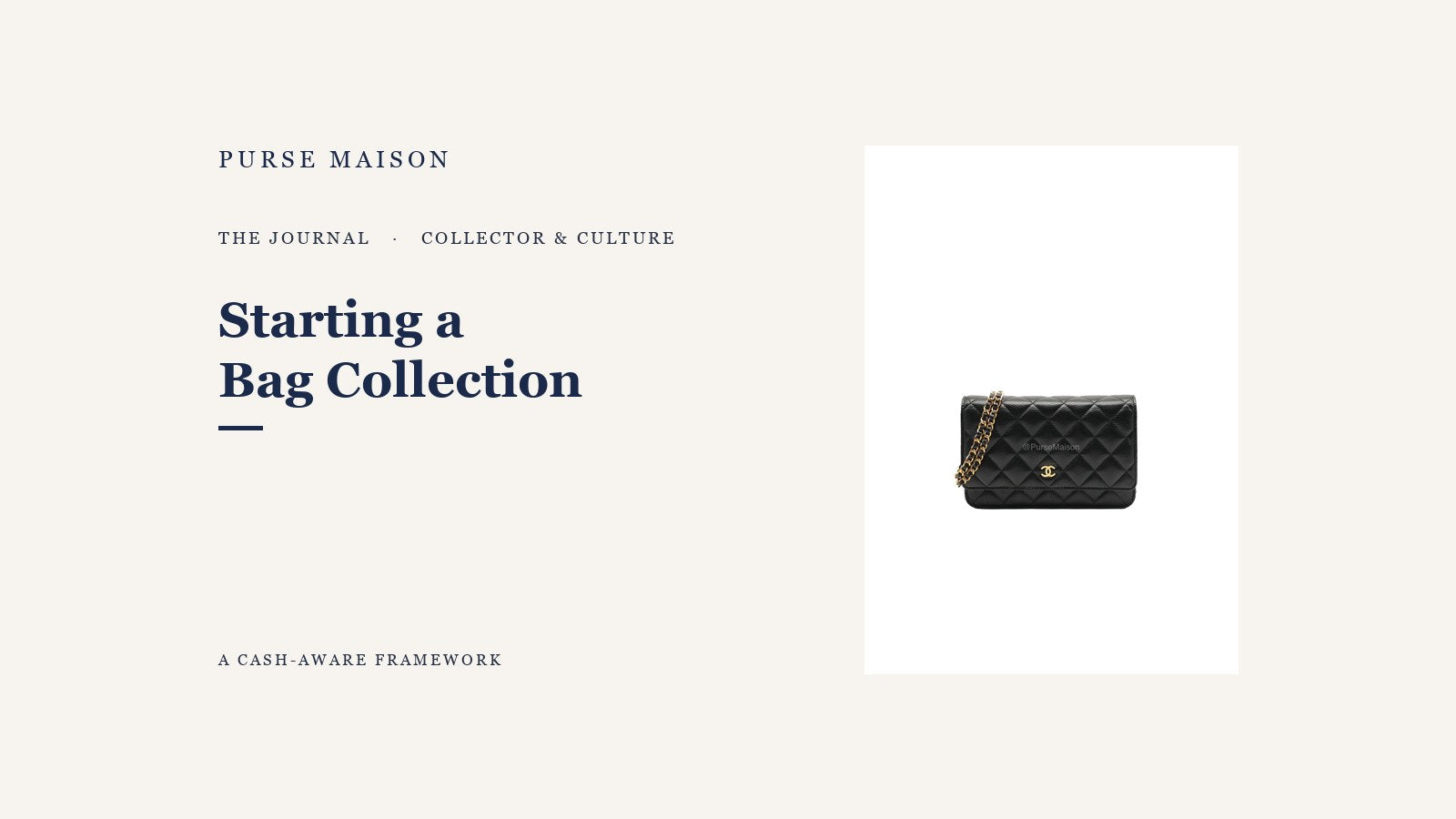
The examples below are current live inventory references, not proof that they are the exact model or historical subject discussed above. Use the linked listing for the item-level record because availability and details can change.


Explore the current Available Now at Purse Maison collection for available alternatives.
A practical checklist before committing
- Write down the job the bag must perform and the contents you actually carry.
- Confirm exact title, model, size, material, color, hardware, condition, and inclusions on the listing.
- Ask one precise question for every unresolved photograph or description.
- Separate asking price from completed-sale evidence and do not treat a luxury purchase as a guaranteed investment.
- Consider Manila storage, rain, humidity, maintenance, and cash opportunity cost.
The Purse Maison Verdict
The best answer survives both the editorial question and ordinary ownership. Choose the piece whose evidence is clear, whose role is useful, and whose trade-offs you can accept without needing a future market outcome to justify the purchase. If an important detail remains unverified, pause, ask, or choose a better-documented alternative.
FAQ
Are they interchangeable?
They can serve overlapping wardrobe roles, but their exact configurations and carrying experiences can differ. Compare the specific listings.
Which is better for daily use?
The one whose access, weight, structure, and condition you will tolerate repeatedly. There is no universal winner.
Should I buy based on resale?
Resale is uncertain and depends on future conditions. Buy only when the ownership case works without a guaranteed outcome.
What should I verify first?
Exact model identity, size, material, hardware, condition, inclusions, and public listing details.
For more context, read Chanel Classic Flap vs Boy Bag vs Chanel 19: Which Suits You.
For more context, read Chanel Classic Flap vs Dior Lady Dior: Which First Icon?.
For more context, read Chanel 2.55 Reissue Sizes Compared: Which One Fits Your Life.
Sources and limits
Sources: Purse Maison Shopify Admin inventory and public listing checked 2026-07-31; Purse Maison Blog Editorial System SOP v1.7. Brand-specific details that vary by edition, market, material, or date should be confirmed against current official specifications. Purse Maison is an independent luxury reseller and is not affiliated with or endorsed by the brands discussed unless expressly stated.

Leave a comment
This site is protected by hCaptcha and the hCaptcha Privacy Policy and Terms of Service apply.