
How Southeast Asian Collectors Buy, Sell, and Track Better
Reviewed by Miss Jay-Ann
Collectors across Southeast Asia are buying, selling, and documenting luxury bags in a market that moves quickly but does not reward guesswork. A screenshot can start a conversation, yet it cannot replace a clear record. A product page can show an asking price, yet that is not the same as a completed sale. A familiar monogram or logo can help identify a model, yet it is not a complete authentication conclusion.
This guide is about building a better loop: identify the piece, record what can be verified, compare like with like, and keep the next decision connected to the evidence. The Philippine context matters because humidity, travel, storage, shipping, and local availability shape how a bag is handled after the purchase. Quick verdict: the collector who keeps a clean item record and separates facts from assumptions makes calmer decisions on both sides of a transaction.
Start with a record before you start with a price
The first useful document is not a mood board. It is an item record. Give each bag a stable name, the exact listing title, brand and model as presented, colour description, material description, hardware description, visible condition notes, included accessories, seller or platform, listing date, and the URL where the information was checked. Add photographs that show the front, back, base, corners, interior, hardware, and any relevant code or marking without treating one photograph as proof of authenticity.
Preserve the original listing language as well as your own normalized labels. A seller may write a spelling variant, omit a series reference, or combine a model name with a colour nickname. Rewriting that text can make later searching harder. Keep a field called “source wording” and another called “collector notes.” This simple separation prevents an interpretation from quietly becoming a fact.

Separate asking, sold, and available information
Price tracking becomes misleading when different numbers are placed in one column. An asking price is a seller’s current offer. A sold price is evidence of a completed transaction only when the source identifies it as such. An auction estimate is a pre-sale range, while an auction result records a result under that auction’s terms. Retail pricing, consignment pricing, and a private offer answer different questions again.
In Southeast Asia, currency conversion can make a comparison look precise while hiding shipping, insurance, duties, platform fees, payment costs, and the difference between a local handover and an imported purchase. Record the original currency and date checked. If you convert, keep the original number beside the converted figure and label the exchange-rate source. A neat spreadsheet is not evidence that two transactions are comparable.
For a collector deciding whether to buy, the most useful question is often not “Is this cheap?” but “What exactly is being compared?” Match model family, size or format, material description, condition, inclusions, provenance evidence, market, and transaction type before drawing a conclusion. If several of those fields are missing, use cautious language and keep the entry as an observation rather than a benchmark.
Buy with a verification trail
A trustworthy purchase trail has more than a receipt image. Keep the seller’s stated condition, all listing photos, the questions you asked, the answers received, the payment and shipping record, and photographs taken on arrival. Note when the parcel was opened and whether the item matched the listing. For higher-value purchases, consider an independent professional assessment appropriate to the brand and model.
No single feature independently proves authenticity. Packaging, a card, a date code, a serial reference, a microchip claim, stitching, hardware, or a familiar smell may be one supporting indicator, but details vary by model, production period, and condition. Counterfeit techniques change over time. Do not turn a checklist into a DIY guarantee, and do not present a specialist’s limited visual opinion as certainty beyond its stated scope.
Ask questions that improve the record: What is included? Which condition points are not visible in the photos? Has the bag been repaired, recoloured, or stored in a humid environment? Is the item being sold by an independent reseller? What will happen if the delivered condition differs materially from the listing? The answers may not eliminate risk, but they make the decision legible.

Sell with clarity, not theatre
Good selling begins by describing what a buyer can actually inspect. Use direct condition language: scuffing at a corner, surface marks, softened structure, hardware hairlines, odour, interior transfer, missing accessory, or a repair that has been disclosed. Avoid vague claims such as “perfect” when the photos show wear. A precise description reduces avoidable negotiation and gives the eventual buyer a fairer baseline.
Photograph the same zones every time so a future buyer can compare entries. Use consistent light, a neutral background, and enough views to show the silhouette and areas that commonly wear. Keep the file names connected to the item record. If the bag moves between a home, a consignment partner, and a buyer, retain the handover dates and the condition at each point without publishing personal information.
When a listing uses a price, label what it means. “Asking” is not “sold.” If you are open to offers, record the final agreed amount privately and do not later describe an uncompleted offer as a market result. Luxury goods are not guaranteed investments, and a clean sales history is more valuable than an inflated claim that cannot be checked.
Track the collection as a living library
A tracker should answer practical questions in seconds. Where is the bag? What is the source URL? When was it last inspected? Which documents or accessories are present? Has the colour or finish changed? Was it exposed to rain, luggage pressure, or long-term heat? A collector can add fields for purchase date, cost basis, sale date, sale proceeds, and expenses, but those fields should remain private and clearly labeled.
Use a stable internal identifier rather than relying only on a title. Listing handles can change, titles can contain spelling errors, and photos can be replaced. Save the full URL, a capture date, and the original image set. If an item is sold, archive the record rather than deleting it. The archive helps distinguish a current listing from a historical observation and prevents a future search from treating an unavailable bag as active inventory.
Review the tracker at a steady interval rather than every time social media changes the conversation. Remove dead links from active views but preserve them in the evidence log. Mark uncertain fields with “unverified” rather than leaving a blank that looks complete. This is especially useful when comparing regional listings across Manila, Singapore, Bangkok, Jakarta, Kuala Lumpur, or Hong Kong, where descriptions and transaction conditions can differ.
Build a Philippine-climate handling routine
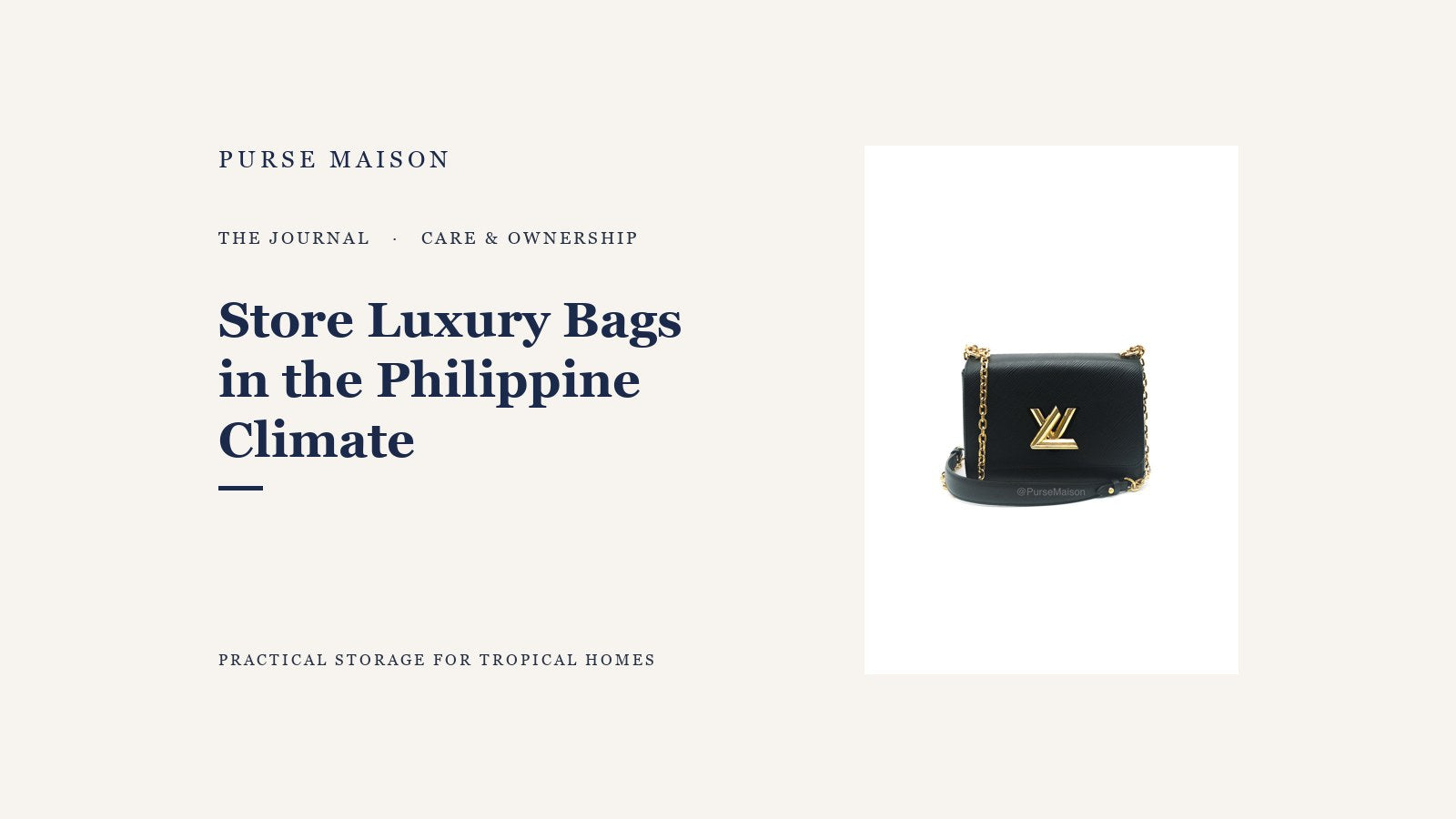
Documentation cannot protect a bag from poor storage. In the Philippines, a collection record should include a simple care note: where the bag is stored, whether the location is exposed to condensation or leaks, when it was last inspected, and whether it returned from travel damp. Keep pieces clean and dry, support their natural shape lightly, and avoid sealing a damp bag in plastic. A dust bag is a surface-dust barrier, not a moisture vault.
If you notice musty odour, spotting, fuzzy growth, tackiness, or an unexplained surface change, isolate the item from the collection and seek qualified guidance. Do not apply household cleaners, heat, perfume, or an unverified mould treatment. Record the condition before moving it so you can explain what changed and when. The right response to uncertainty is a better record and appropriate help, not a stronger-sounding conclusion.

Currently at Purse Maison
Recent live inventory checked for this guide included a Goyard Rouette Souple PM in black Goyardine canvas, a Goyard Cap Vert PM in black and tan Goyardine canvas, and The Row Marlo 17 in black grained calfskin leather. Check each live listing for its current condition, inclusions, availability, and price rather than copying those details into a permanent article. The Goyard collection is a useful starting point when a single piece has moved on.
For the Journal’s wider decision context, continue to how to choose a luxury bag for travel, compare how Constance sizes affect a collector’s choice, or review the distinctions between single-flap and double-flap construction.
The Purse Maison Verdict
Better collecting is not about recording everything in public. It is about preserving enough reliable detail to make the next private decision well. Keep source wording, images, dates, condition, transaction type, and location together. Separate asking from sold. Treat authentication as a professional assessment rather than a checklist promise. When selling, describe the item plainly and disclose what a buyer can reasonably inspect.
For Southeast Asian collectors, the strongest system is portable: it works across currencies, platforms, countries, and changing inventory. Add Philippine-climate storage notes, keep a quiet archive of sold or unavailable pieces, and review uncertain fields before relying on them. The result is less drama, clearer conversations, and a collection history that can support future buying, selling, insurance discussions, or specialist review without overstating what the evidence proves.
FAQ: buying, selling, and tracking luxury bags
Should I track asking prices or sold prices?
Track both, but label them separately. Asking prices describe current offers; sold prices describe completed transactions only when the source confirms completion. Keep currency, date, condition, inclusions, and market beside the figure so unlike entries are not treated as direct comparables.
What should I save when I buy a preloved bag?
Save the original listing, seller description, photos, questions and answers, payment and delivery record, and arrival photographs. Add condition notes and an independent professional assessment when appropriate. Keep the source wording beside your own interpretation.
Can a code, card, or packaging prove authenticity?
No single feature independently proves authenticity. A code, card, packaging element, hardware detail, or construction point may be supporting evidence, but details vary and counterfeit methods change. Professional authentication is recommended for high-value purchases.
How should I prepare a bag for sale in a humid climate?
Describe its actual condition, photograph it consistently, store it clean and dry, and do not seal it while damp. Keep it away from condensation, leaks, and direct heat. If you see mould-like growth or a surface change, isolate it and seek qualified guidance before listing it.
Is a luxury bag a guaranteed investment?
No. Luxury goods are not guaranteed investments. Some versions may attract stronger demand in particular markets or periods, but outcomes depend on condition, authenticity assessment, timing, transaction costs, and buyer demand. Treat market observations as qualified information, not a promise.
A clear next step
If you are building a collection record, preparing a sale, or assessing a purchase, a Purse Maison specialist can help you organize the questions around a specific piece. Purse Maison is an independent luxury reseller and is not affiliated with or endorsed by the brands discussed unless expressly stated.
Sources: brand-published care and product information, established conservation guidance, and live Purse Maison inventory checked July 23, 2026. This article intentionally avoids invented market percentages, prices, authentication certainty, and transaction guarantees.

Leave a comment
This site is protected by hCaptcha and the hCaptcha Privacy Policy and Terms of Service apply.