
Saint Laurent Grain de Poudre: Look, Feel, Durability, and Care
Quick answer: Treat Saint Laurent Grain de Poudre as a surface to inspect, not a promise of effortless durability. The actual bag’s texture, structure, finish, hardware, and wear matter more than a material label alone. Use conservative care, avoid unverified chemicals, and confirm the item-specific guidance when a mark or change is uncertain.
Reviewed by Miss Jay-Ann
What the name can—and cannot—tell you
A material or finish name gives a useful starting point, but it cannot describe every preloved example. Use changes through handling, storage, friction, humidity, and cleaning history. Two bags with a similar label can present differently because their lives were different.
That is why a buyer should ask for close images of the corners, handles, base, hardware, interior, and any area described as worn. A broad statement such as “durable” is less useful than a clear description of the actual item.
Look, feel, and structure
Inspect whether the surface reads consistently across panels and whether the bag keeps the structure expected of its design. Note shine, flattening, creasing, scuffs, or edge wear without treating one observation as a diagnosis. If the listing cannot answer an important question, ask for more evidence.

Safe ownership habits
Prevention is the safest default. Keep the bag away from prolonged moisture and direct heat, avoid placing it on dirty or wet surfaces, and store it with reasonable airflow. In the Philippines, humidity and sudden rain make the transition from outdoor use to storage worth planning.
Do not use household wipes, alcohol, oils, or a generic conditioner simply because the surface looks dry. A product that changes one finish can permanently alter another. For a mark, odor, peeling edge, or shape concern, stop and ask a qualified specialist.
Current pieces as visual reference
Currently at Purse Maison
Current inventory changes quickly because each preloved piece is unique. These examples are included to show how the guide can be applied to real listings; they are not a promise that the exact item will remain available.
- Goyard Saint Louis Tote Bag PM in Tan Goyardine Canvas with Croc Universal Clip Charm — review the live listing for the current condition, inclusions, and availability.
- Saint Laurent Cabas Small Monogram in Black Smooth Calfskin Leather — review the live listing for the current condition, inclusions, and availability.
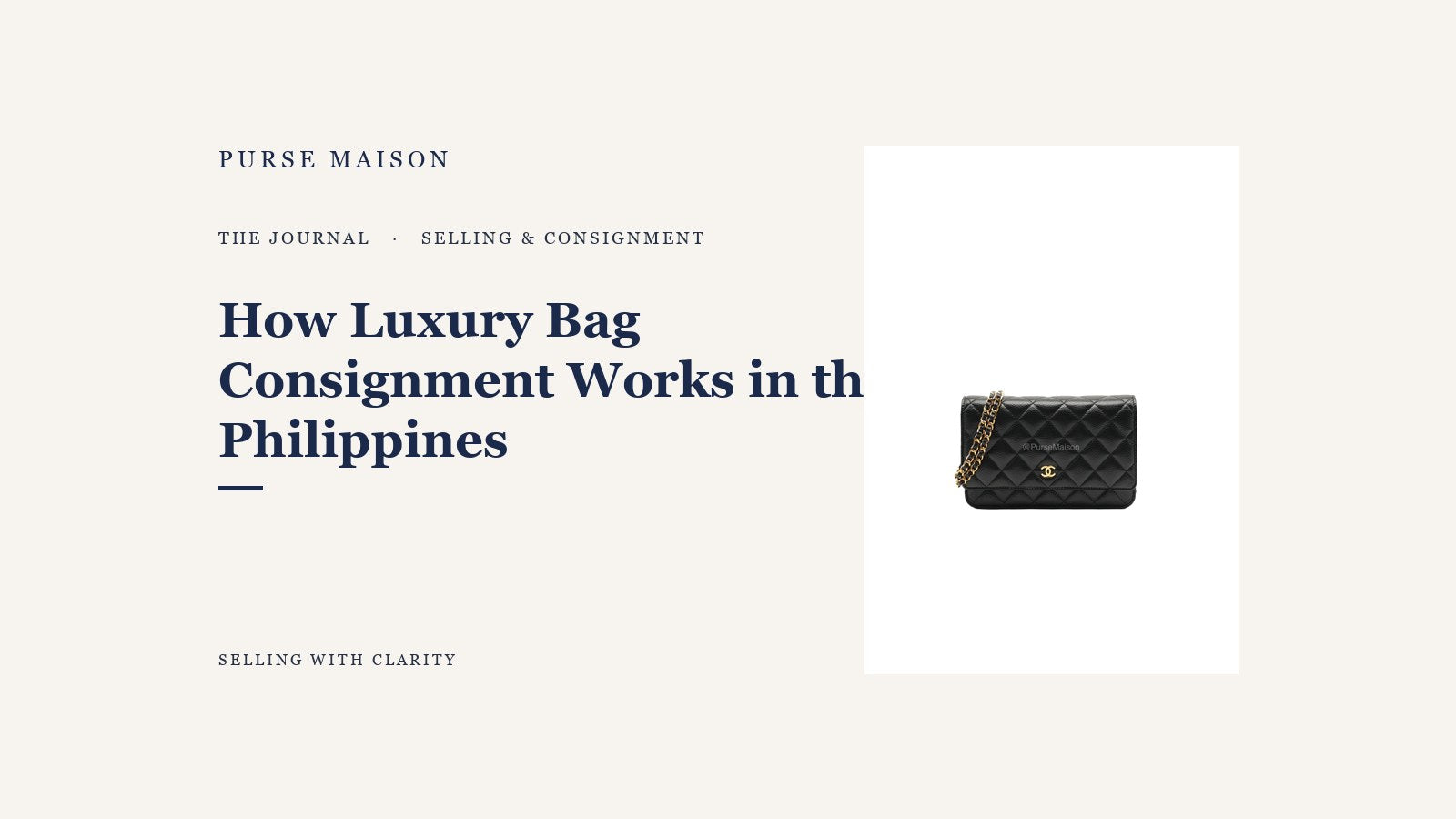
- Chanel Classic Wallet on Chain (WOC) in Black Caviar Leather Gold Hardware Series 30 — review the live listing for the current condition, inclusions, and availability.
Use the Saint Laurent collection to compare current listings, but read every item separately. The model name does not replace the condition description.

What matters for resale and daily use
For daily use, the right choice is the surface and structure you can maintain without anxiety. For resale, accurate condition description and complete disclosure matter more than claiming that a finish is universally resistant. Buyers value clarity because it helps them price the risk of ownership for themselves.
The Purse Maison verdict
Grain de Poudre can be attractive and practical when the owner understands the specific piece and follows conservative care. Let inspection, official guidance, and professional advice lead. Do not let a material name turn uncertainty into a promise.
A decision worksheet for the owner
Before making a decision, write down the one outcome that matters most and the compromise you are willing to accept. This prevents a polished image, a familiar name, or a moment of scarcity from taking over the whole evaluation. A useful worksheet separates what is known from what is assumed. Record the exact listing title, the condition points that matter, the questions still unanswered, and the reason this item fits the intended use. If the reason cannot be stated clearly, waiting is a legitimate decision.
Next, compare the piece with your real routine rather than an imagined version of it. Think about how you move through a normal week, where the item will be stored, how often it will be used, and what maintenance you will realistically perform. Philippine weather is part of that calculation: heat, rain, humidity, and air-conditioning can affect comfort and care habits. The aim is not to make the decision fearful. It is to make the ownership cost visible before the purchase or handoff.
Use the live listing as the current record. Read the exact model name, images, condition description, inclusions, and availability. If a detail is not stated, treat it as unknown and ask for clarification. Do not replace an unanswered question with a general statement about the brand or model. In preloved luxury, the individual item is the evidence. A general guide can frame the questions, but it cannot quietly fill the gaps.
Then test the strongest alternative. For a buying decision, compare one smaller or simpler option and one more flexible option. For a care decision, compare prevention with professional advice. For a consignment decision, compare a revised presentation with a price change, and separate the owner’s timing from the buyer’s response. The point is not to manufacture a winner. It is to show which trade-off you are choosing and why.
Finally, make the next step reversible where possible. Ask for one more close-up, arrange a careful inspection, confirm the current terms, or save the listing and return to it after a pause. A high-value decision should survive a night of reflection. If the answer becomes weaker when urgency is removed, that is useful information—not a missed opportunity.
Use a small inspection routine before buying or consigning: photograph the surface under neutral light, check high-friction points, compare the edges with the body, and ask whether any treatment or repair has been performed. A consistent routine is more reliable than a broad claim that the finish is “hard-wearing.” It also gives the next owner a more honest starting point.
When the surface has changed, resist the urge to improve the appearance immediately. Document first, then ask for advice. An intervention that makes one mark less visible can change the sheen or texture across a larger area. Conservative care protects options.
Questions before committing
A careful condition description should be comfortable with neutral language. “Light surface wear visible at the lower corner” is more useful than “excellent for its age” when the reader needs to decide whether the mark matters to them.
One final check is to ask whether the decision still makes sense if the item is not available tomorrow. If the answer is yes, the fit is probably grounded in the owner’s needs. If the answer is no, urgency may be doing more work than evidence. A calm process leaves room for another suitable piece to appear.
That pause is not anti-commerce. It is how a luxury purchase, care choice, or consignment decision becomes part of a longer relationship with the object. The reader should leave with a practical next action and a clear understanding of what remains unknown.
Good care is also a record of restraint. Note when the bag was exposed to rain, when a mark first appeared, and what—if anything—has been applied. That information helps a specialist assess the surface and prevents repeated products from being layered on top of one another without a clear reason.
When a buyer is comparing two listings, ask the same questions of both: what wear is visible, what care history is known, and which details still need confirmation. Consistent questions make a comparison fairer and keep the discussion anchored to the actual bags rather than the reputation of a finish.
For future reference, photograph the surface before and after any professional consultation and keep the advice with the listing record. That does not make a treatment risk-free, but it preserves the sequence of events and gives the next owner a more accurate basis for care.
That same comparison method helps when a client is choosing between a familiar finish and a quieter alternative: inspect first, describe the evidence, and choose the surface that fits the intended routine rather than the one with the strongest reputation.
FAQ
Is Grain de Poudre scratch-proof?
No finish should be described that way. Inspect the actual surface and use conservative prevention.
Can I clean it at home?
Only with guidance appropriate to the exact finish. Avoid unverified household products and seek a specialist when uncertain.
What should I check in a preloved listing?
Review corners, edges, handles, hardware, interior, shape, any repairs, and the accuracy of the condition description.
Does a material label prove authenticity?
No. It is one supporting description and never independently proves authenticity.
saint laurent leathers and materials guide saint laurent smooth calfskin look feel durability and care saint laurent quilted lambskin look feel durability and careSources: official brand guidance and current Purse Maison inventory evidence were checked for this article; reseller sources were used only for internal orientation and are not named or linked here.
Purse Maison is an independent luxury reseller and is not affiliated with or endorsed by the brands discussed unless expressly stated.

Leave a comment
This site is protected by hCaptcha and the hCaptcha Privacy Policy and Terms of Service apply.