
What Information to Prepare Before Consigning
Reviewed by Miss Jay-Ann
Consigning a luxury bag is easier when the first conversation begins with a clear record rather than a hopeful estimate. Before you send a message or arrange an intake, gather the information that helps a specialist understand what the item is, how it has been used, what comes with it, and who has the right to consign it.
The aim is not to present a flawless story. A truthful, detailed one is more useful. The Purse Maison consignment SOP treats the early submission as a pre-screen, not a final decision. Physical inspection, authentication, condition grading, approved terms, and complete listing data still have to follow. This guide shows how to prepare without promising acceptance, a final commercial outcome, a sale date, or a payout based on photographs alone.
Begin with an honest item record
Start with the basics in one note. Write down the brand, model name if known, category, colour as you understand it, and the most useful identifying details visible on the item. If you are unsure of a model name, say so. A clear photograph and an honest uncertainty are safer than a confident guess that later has to be corrected.
Add how and when you acquired the bag in broad terms. You do not need to create a dramatic provenance story. A simple account of whether it was bought directly, received as a gift, or acquired preloved gives the receiving team context. If another person owns the bag, pause before submitting it. The SOP does not accept anonymous property or items with unresolved ownership concerns.
Also record whether the bag has been used regularly, occasionally, or mainly stored. Mention known repairs, alterations, cleaning, edge work, replacements, or other changes. These details are not admissions to hide. They are part of an accurate assessment and should be disclosed before an item is represented to a buyer.

Documentation: gather what exists
Documentation can mean different things to different owners. Prepare proof of purchase if you have it or it is required for the item and agreement. If you do not have a receipt, do not manufacture a replacement explanation or treat its absence as proof of anything. The SOP specifically separates proof of purchase from authentication evidence.
Useful preparation includes older listing records, service or repair notes, a certificate when one exists, and photographs from the time you acquired the piece. Keep the originals in your possession until the intake team gives you a secure process for anything they need to review. Do not send unnecessary personal documents through an informal chat channel. Identity and payout information should be collected through the approved secure method, not by forwarding sensitive copies casually.
For a shipped intake, keep the tracking and insurance details together with your submission record. The approved route, declared-value instructions, packaging expectations, and responsibility boundaries should be confirmed in writing before you send the parcel. The preparation task is to ask what is required, not to assume that any courier, packaging, or coverage arrangement is acceptable.
A good document folder has a simple index: item identity, ownership history, purchase evidence you have, repair history, inclusion list, current photographs, and questions for the specialist. This helps the team find the relevant fact without turning the first review into a search through scattered messages.
Condition: describe what can be seen
Condition is most useful when it is specific and neutral. Walk around the bag in good light and look at the base, corners, handles, strap, hardware, exterior panels, opening, lining, pockets, and any identifiers. Note marks, scuffs, scratches, colour variation, softness, creasing, stains, odour, edge wear, shape changes, and missing or replaced components only when you have actually observed them.
Do not use a broad label such as “excellent” as the whole condition record. A label can be a quick summary, but it cannot replace evidence. “There is visible wear at one lower corner” tells a receiving specialist more than “gently used.” If you are unsure whether a mark is original, a sign of wear, or the result of a repair, describe the appearance and flag the uncertainty.
Take overview photographs and close-ups. Include every side, the interior, the base, hardware, identifiers, inclusions, packaging, and each visible defect. Avoid filters, heavy retouching, or angles that conceal a problem. Photographs help with pre-screening, but they do not replace physical inspection, authentication, or condition grading. The SOP says never to promise authenticity or a final assessment from photos alone.
For climate-sensitive storage, mention anything that may have happened while the bag was kept in a Philippine home, office, car, or storage unit. Humidity, heat, spills, and long periods without inspection can affect materials in ways that are easier to address when disclosed early. This is not a diagnosis. It is a prompt to give the receiving team a complete starting point.

Inclusions and packaging: make a separate list
Write down every inclusion separately. Depending on the item, that may include a strap, pouch, wallet, key, lock, clochette, dust bag, box, booklet, certificate, or other accessory. Use the name you can support from what you can see. If an item is missing, say “not present” rather than leaving the reader to infer that it was never supplied.
Separate what belongs to the bag from what you plan to add for shipping. A replacement dust bag or third-party insert may be useful in some circumstances, but it should not be represented as an original inclusion. The same principle applies to packaging. Record the condition of boxes, ribbons, and protective materials if they are part of the submission, while keeping the item description focused on what the buyer will actually receive.
Small components matter because completeness can change how a specialist describes and presents a piece. They also matter for the custody record. The intake process records item sides, identifiers, inclusions, packaging, and visible defects, so your pre-intake list gives both sides a point of comparison.
Ownership and terms belong in the first conversation
Before an item moves, be ready to confirm your ownership or right to sell it. The SOP calls for a signed representation covering ownership or right to sell, disclosed repairs and alterations, authenticity knowledge, liens or claims, and acceptance of investigation and return rules. You do not need to write a contract yourself, but you should be prepared to answer those questions accurately.
If a family member, business, estate, or another owner is involved, resolve the authority question before asking a team to receive the bag. If there is a lien, dispute, inheritance issue, or another claimant, disclose it. A concern does not become safer by appearing later in the process. Processing may need to pause while the right person and the correct evidence are established.
Ask for the commercial terms in plain language before you agree. The listing basis, any authorised markdown floor, the consignor net or payout basis, the Purse Maison fee or commission, approved costs or taxes, term, withdrawal path, unsold-item treatment, promotional use, and payout trigger should not be treated as one number or one vague promise. The SOP requires documented approval and signed terms before an item goes live on verbal terms alone.
Comparable asking amounts can help frame a discussion, but they are not proof of a completed sale value. Sale timing is not guaranteed. If you need a particular outcome by a certain date, share that context as a preference, not as an assumption about what the store can promise.
A calm preparation plan
Use this order when preparing your submission:
- Identify the item and describe any uncertainty.
- Write the ownership history and disclose repairs, alterations, or claims.
- List every inclusion and note what is not present.
- Photograph all sides, interior, identifiers, packaging, and visible defects.
- Gather purchase or service documentation you have through a secure process.
- Ask whether showroom intake or an approved insured shipping route is suitable.
- Request the written terms and confirm what still depends on physical inspection and review.
Keep one copy of your submission and photographs. At an in-person intake, the SOP calls for an intake receipt or acknowledgement. For a parcel, it calls for a receipt summary and a way to resolve discrepancies. Read those records before the item leaves your control or before you accept that the intake description is complete.
If you want more context on the journey, our guides to how luxury bag consignment works in the Philippines and what happens from intake to authentication to listing explain the stages without turning a preliminary submission into a promise.

What happens after you submit
The first response is a suitability conversation. The team may ask for clearer images, missing details, or a safer way to receive the item. If the submission appears potentially suitable, the process moves toward an approved intake. If it is not suitable, the reason should be recorded and communicated respectfully.
Once received, the item is assigned an intake identity and documented. It moves through an unverified state before authentication and condition work. If external review is needed, the reason and revised expectation should be explained without implying a result. An item should not be displayed or listed until an authorised release state exists.
After assessment, the approved terms guide the listing, communication, sale clearance, payout reconciliation, withdrawal, or return. Finance verifies the buyer funds, agreement, deductions, and payee details before a payout is marked complete. Your best contribution is a complete, honest record that lets each later stage refer back to the same facts.
Currently at Purse Maison
Recent live listings show the range of item records a specialist may need to distinguish. You can browse the current Purse Maison collection and compare the detail in each listing without relying on a generic bag description.
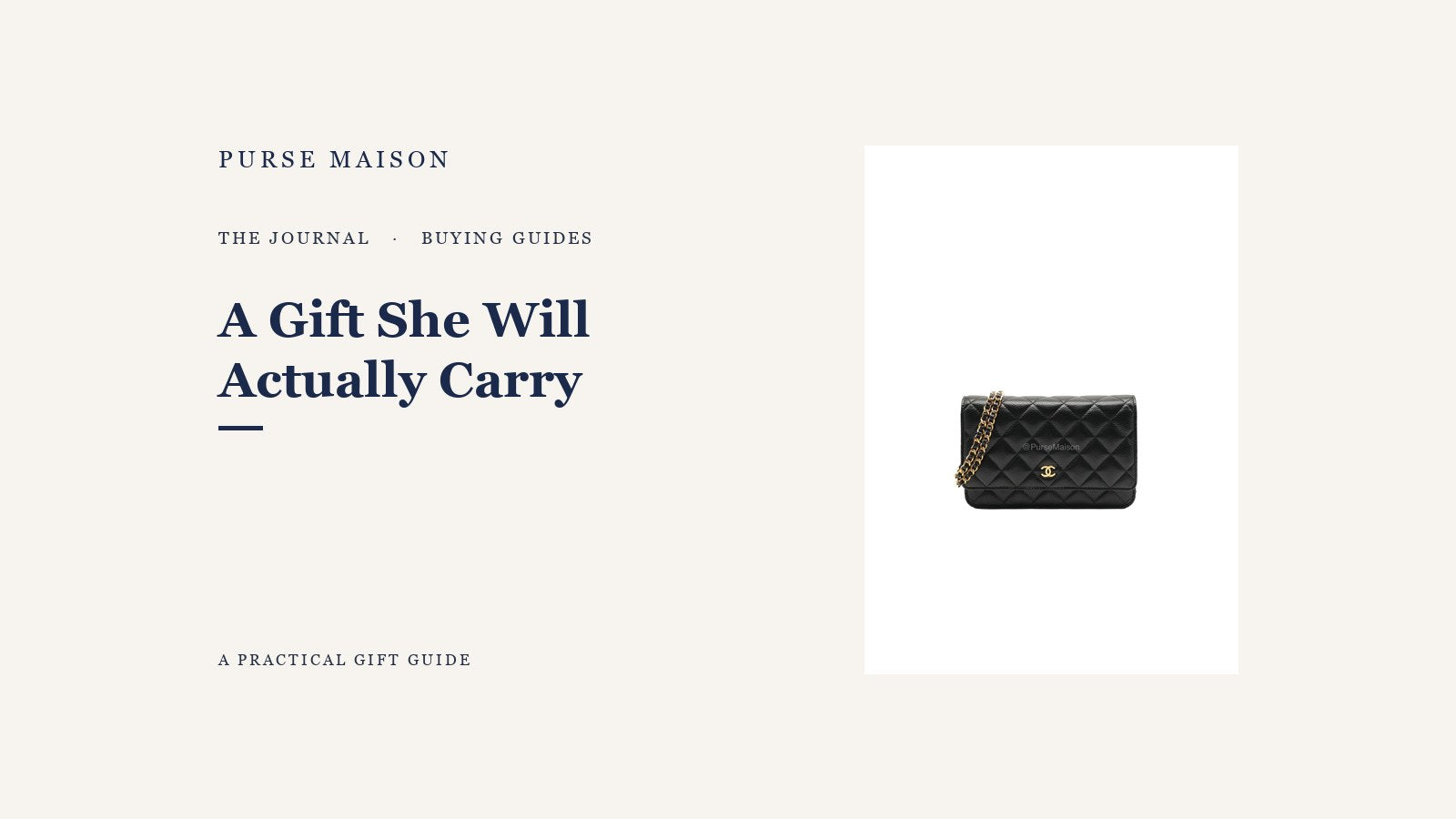
- Chanel Classic Wallet on Chain (WOC) in Black Caviar Leather Gold Hardware Series 30
- Gucci Horsebit Mini 1955 Canvas Navy Blue Crossbody Bag
- Gucci Mini Dome in Teal Microguccissima Leather Shoulder Bag
These links are examples of current listing presentation, not a statement that a future consignment will receive the same description, assessment, or outcome.
FAQ: Frequently asked questions
Do I need a receipt before I ask about consignment?
Not necessarily. The SOP says proof of purchase is obtained when you have it or when it is required, and that lack of a receipt is not itself authentication evidence. Tell the team what you have, what you do not have, and whether another document may help establish the item history.
Can photographs guarantee that my bag will be accepted?
No. Photographs support pre-screening, but physical inspection, authentication, condition grading, ownership checks, and approved terms still matter. Do not rely on a photo-based estimate as an acceptance, authenticity, commercial outcome, sale-time, or payout promise.
Should I clean or repair the bag before sending it?
Disclose any existing work first. Cleaning, repair, or content use may need case-by-case consent or authority under the agreement. Do not hide a defect or make an unapproved alteration simply to improve the photographs.
What if one inclusion is missing?
List it as missing. A separate inclusion record is more useful than an impression that the item is complete. If you are unsure whether an accessory belongs to the original set, label that uncertainty and let the specialist review it.
What should I ask about payout?
Ask how the written agreement defines the payout trigger, the consignor net or payout basis, authorised deductions, payee details, and the process for sale clearance or disputes. The SOP does not support a payout promise based on a screenshot or before the required reconciliation is complete.
The Purse Maison Verdict
The strongest consignment submission is not the one with the most flattering adjectives. It is the one that gives a specialist a clear item identity, honest condition evidence, a separate inclusion list, documentation you have, and a confirmed right to consign. It also leaves room for the parts that can only be decided after physical review and approved terms.
Prepare those facts, keep sensitive documents in the approved secure channel, and treat every estimate as provisional until the proper assessment is complete. If you would like to discuss an item, explore the current collection first, then request a consignment assessment with the record you have prepared.
Purse Maison is an independent luxury reseller and is not affiliated with or endorsed by the brands discussed unless expressly stated.
Sources and limitations: customer-facing guidance derived from the Purse Maison Consignment Intake to Payout SOP, version 0.9 draft-for-review, and the live product and collection records checked for this article. No fee, service level, acceptance decision, authenticity conclusion, commercial outcome, sale timing, or payout timing is promised here.

Leave a comment
This site is protected by hCaptcha and the hCaptcha Privacy Policy and Terms of Service apply.