
What to Prepare Before Consigning Your Bag
Reviewed by Miss Jay-Ann · Purse Maison Editorial Team · Updated 2026-07-18
A consignment inquiry can begin with a single photo, but a useful assessment needs more than a flattering angle. The team needs to understand what the item is, who has the right to consign it, what it has experienced, what comes with it, and how you would like the process to fit your timing.
That preparation protects both sides. It reduces avoidable back-and-forth, makes condition conversations more precise, and helps you compare any eventual terms without confusing an early estimate with a final decision. The checklist below follows the customer-facing parts of Purse Maison's Consignment Intake to Payout workflow. The underlying SOP is draft-for-review, so its service levels and payout timing are proposals, not promises.
Quick checklist: Be ready to confirm your right to consign, identify the exact item, disclose wear and repairs, list every inclusion, share clear photos, state your requested timing, use an approved intake route, and ask for written terms before the bag is listed.

1. Start with the right to consign
Claim: The first question is not how much the bag might sell for. It is whether you are authorized to offer it.
Explanation: Before an item can move through a consignment assessment, the owner or authorized representative needs to be able to confirm the right to sell. That matters when a bag is jointly owned, inherited, held for someone else, connected to an unresolved claim, or subject to another agreement. If the ownership story is unclear, pause rather than trying to solve the uncertainty through a chat message.
Evidence: The Consignment Intake to Payout SOP calls for a representation of ownership or right to consign, together with disclosure of known claims and relevant circumstances. It also says that anonymous property or an item with unresolved ownership concerns should not be accepted.
Practical meaning: Have your own ownership details ready and be candid about anything another person may need to approve. If a family member is the owner, arrange for the correct person to participate. This guide is not legal or tax advice; where authority is genuinely disputed, seek advice from a qualified professional before submitting the item.
2. Identify the bag precisely
Claim: A precise description is more useful than a confident guess.
Explanation: Record the brand, model, size, colour, material or canvas, hardware finish, approximate purchase period if known, and any visible identifier. Use the wording on an existing receipt or prior listing when it is accurate. If you do not know a detail, say so. Do not fill gaps with a model name that merely looks similar.
Evidence: The intake workflow asks for the item category, brand and model, ownership history, condition, known repair or alteration, inclusions, requested price or timing, and clear overview photos. General authentication guidance also treats date codes, serial systems, microchips, stamps, construction, and materials as details that must be considered together rather than as standalone proof.
Practical meaning: Make a small reference sheet before your first message. Include alternate spellings or the name used by the boutique if you have it, but keep uncertainty visible. A code, card, receipt, or dust bag may add useful context; none should be presented as a guarantee of authenticity on its own.
3. Describe condition before anyone asks
Claim: Honest condition notes are more valuable than optimistic adjectives.
Explanation: Inspect the exterior, corners, handles or straps, glazing, edges, hardware, closure, lining, pockets, and base. Look for stains, odour, scratches, scuffs, creases, colour transfer, tarnish, loose threads, or shape changes. Include anything you know about cleaning, recolouring, repair, replacement, or alteration. Do not hide a flaw because it seems minor in a photograph.
Evidence: The SOP requires visible defects, inclusions, and known repairs or alterations to be captured as part of the submission and later intake record. A physical inspection and condition grading still have to happen before any final terms are set.
Practical meaning: Use neutral wording such as “light corner rubbing on the front-right edge” rather than “excellent condition” if you have not examined the bag recently. If you are considering a repair or spa treatment, ask first. A new finish can change the item's condition story, and a repair should never be used to conceal history.

For a closer look at one common condition question, see how corner wear can be assessed and repaired. The same principle applies here: document first, then decide whether professional work is appropriate.
4. Gather inclusions and provenance details
Claim: “Complete” should mean a recorded list, not a memory of what was once in the box.
Explanation: Set out the item and list each related piece separately: dust bag, box, strap, lock, keys, clochette, pouch, authenticity card where applicable, receipt, tags, certificates, and other accessories. Note what is absent. If you have purchase history or prior service records, describe them accurately without implying they settle authentication.
Evidence: The intake process records each inclusion and asks the consignor to disclose the known history of the item. The public listing later needs to match the approved condition and inclusions, so early accuracy saves corrections.
Practical meaning: Photograph the inclusions together and label them in your notes. Keep unrelated valuables, cash, passwords, and unnecessary original IDs out of the parcel or appointment. Send only what the approved written instructions require.
5. Take clear photos and state your timing
Claim: Clear documentation makes an assessment more useful, but it cannot replace a physical review.
Explanation: Take front, back, both sides, base, handles, strap, interior, pockets, hardware, identifiers, inclusions, and every known flaw. Use even daylight or a bright neutral room, keep the camera parallel to the surface, and avoid filters or aggressive editing. Include one scale-consistent overview and several close-ups. If the bag has been stored for a while, inspect it immediately before photographing.
State what you are hoping to achieve and when you would ideally like to move forward. A requested timing is useful context, not a promise that the item will be accepted, listed, sold, or paid out on that date. Likewise, a requested price is a starting point for a documented discussion, not a final valuation.

6. Choose a secure intake route
Claim: Do not improvise the handover.
Explanation: If the item is suitable to proceed, use an approved showroom appointment or an approved insured shipping route. Wait for the correct written instructions before sending a parcel. Keep tracking and any required shipping documentation. For an in-person intake, bring the item and the inclusions you have declared, then review the receipt or acknowledgement for discrepancies.
Evidence: The consignment workflow distinguishes between secure showroom intake and approved shipping, and it calls for an intake record that matches the item, inclusions, and declared details.
Practical meaning: A secure route protects the chain of information and the physical item. If a courier address, packaging instruction, declared value, or insurance requirement is unclear, ask before dispatch. Do not send passwords, cash, or personal documents that were not requested through the approved channel.
7. Set expectations before you send
Claim: Preparation is not acceptance.
Explanation: Photos can support a preliminary suitability conversation, but physical inspection, authentication, condition grading, pricing, and agreed terms still come later. The eventual written terms should distinguish list price, any authorized markdown authority, consignor net basis, fees or deductions if applicable, the payout trigger, withdrawal or return rules, and treatment of an unsold item. Ask questions until those terms are understandable.
Evidence: The draft SOP expressly says not to promise acceptance, authenticity, final price, sale time, or payout based on photographs alone. Its listed service levels and proposed payout timing are draft targets, not promises, until an approved agreement and finance workflow confirm them.
Practical meaning: Keep your expectations flexible and keep the final agreement. Asking prices are not completed-sale values, and a bag can be declined or require additional review. A calm, written explanation is more useful than a quick verbal assurance.
Consignment preparation checklist
- Authority: I can confirm my ownership or right to consign, and I have disclosed any known claim or shared ownership issue.
- Identity: I have recorded the exact brand, model, size, material or canvas, colour, hardware, and known identifiers without guessing.
- Condition: I have checked corners, handles, edges, hardware, interior, base, closure, smell, stains, repairs, and alterations.
- Inclusions: I have listed each box, dust bag, strap, lock, key, card, receipt, certificate, tag, and accessory separately.
- Photos: I have clear overviews and close-ups of the item, identifiers, inclusions, and every visible flaw.
- Timing: I have stated my preferred timing and understood that it is a request, not a promised result.
- Intake: I will use only an approved appointment or shipping route and will retain tracking or acknowledgement.
- Terms: I will read the written price, fee or deduction, term, withdrawal, return, and payout provisions before the bag is listed.
Currently at Purse Maison
Current inventory changes, but live listings show why exact identification matters. These examples use the product names as listed today; review each page for its current condition notes and inclusions rather than relying on a general model label.
- Chanel grand shopping tote black caviar leather SHW series 20/42
- Louis Vuitton Neverfull Bandouliere Inside Out MM in Monogram Canvas (Microchip)
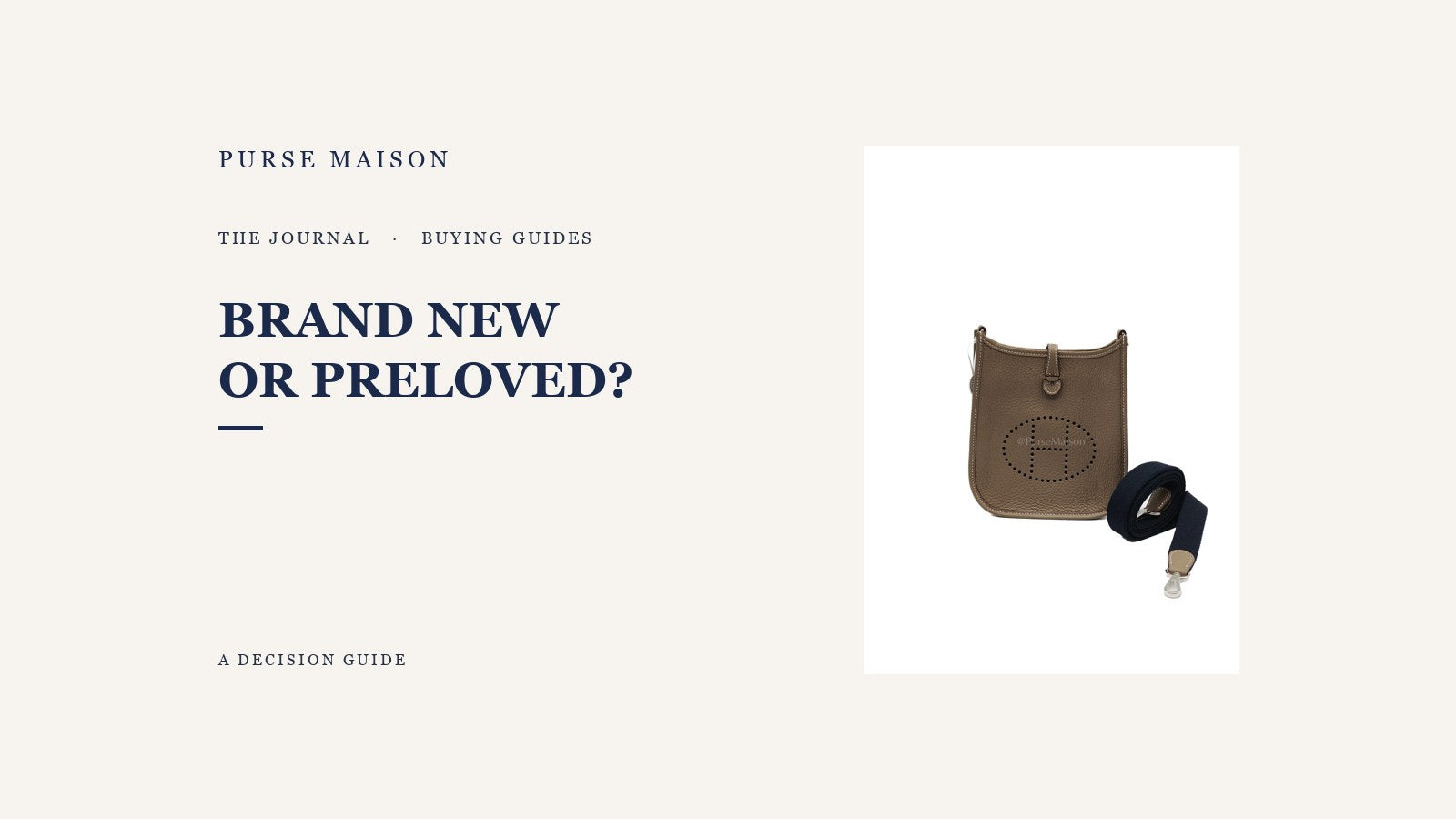
- Hermes Evelyne 16 Amazone in Etoupe Clemence Leather with Navy Blue Strap Palladium Hardware Stamp K(2025)
These individual pieces sit alongside the current preloved luxury bag collection, which is the more durable place to browse as one-off listings change.
For a broader view of how a considered collection is built, continue with building a luxury bag collection with purpose and the practical guide to preparing a bag for long-term storage.
Consignment preparation FAQ
Do I need an original receipt?
Bring it if it is available and relevant, and describe it accurately. If it is missing, say so. Lack of a receipt is not, by itself, proof of authenticity or proof that an item cannot be reviewed.
Should I repair or clean the bag before submitting it?
Do not assume that a repair, recolouring, or cleaning will improve the outcome. Disclose any work already done and ask before authorizing new work. The condition story should remain transparent.
What photos should I take?
Show all sides, the base, handles or straps, interior and pockets, hardware, identifiers, inclusions, and every visible flaw. Use clear, unfiltered images. Keep personal documents and unrelated valuables out of the frame.
Can I ship the bag immediately?
Wait until the team confirms an approved shipping route and gives the current packaging, address, declared-value, tracking, and insurance instructions. Do not improvise a destination from an old message.
What if the bag belongs to someone else?
Do not submit it until the owner or authorized representative can confirm the right to consign. Shared, inherited, pledged, or disputed ownership needs to be resolved before the item moves forward.
The Purse Maison Verdict
The best consignment submission is not the one with the most flattering description. It is the one that makes the item easy to identify, easy to inspect, and easy to discuss honestly. Confirm authority, document the bag as it is, gather every inclusion, and ask for written terms. That preparation cannot guarantee acceptance, authenticity, a final price, a sale date, or a payout date, but it gives the conversation a sound starting point.
If your bag is ready for a careful review, begin with the Purse Maison consignment guidance and submit a clear assessment request.
Purse Maison is an independent luxury reseller and is not affiliated with or endorsed by the brands discussed unless expressly stated.
Sources: Consignment Intake to Payout SOP (draft-for-review); Purse Maison FAQ Knowledge Base; Shopify live inventory; verified across multiple industry references — checked 2026-07-18.
If you are still deciding between a new and preloved route, compare the trade-offs in brand new vs preloved how to decide.

Leave a comment
This site is protected by hCaptcha and the hCaptcha Privacy Policy and Terms of Service apply.