
Which Brands and Models Are Easiest to Consign
Reviewed by Miss Jay-Ann · Purse Maison Editorial Team · Updated July 29, 2026
“Easy to consign” does not mean that every item from a familiar label will be accepted, priced high, or sold quickly. Consignability is a practical fit between a recognisable item, current buyer interest, condition, provenance, liquidity, and the seller’s expectations. It is assessed piece by piece, not by brand name alone.
For a Philippine owner deciding what to submit, the best starting point is a complete description rather than a wishful ranking. Which exact model is it? What has happened to it since purchase? What comes with it? Can ownership and terms be documented? Is there a realistic audience at a price that makes sense for both sides?
The short answer: recognisable, wanted, well-documented
Brands and models are generally easier to discuss when buyers can identify them without extensive explanation, when there is an active audience for the use case, and when the specific item is in condition that can be clearly represented. A familiar name lowers one kind of friction. It does not remove authentication, condition, pricing, or ownership questions.
Some bags attract a broad range of practical buyers because their format is easy to understand: an everyday tote, a compact crossbody, a work-friendly top handle, or a small evening piece. Other items can be highly distinctive yet appeal to a narrower collector. Narrower does not mean impossible. It means seller expectations and price positioning need more care.
Recognisability starts with the exact model
Brand recognition helps a listing appear in a buyer’s search, but model recognition does the more important work. A buyer may be looking for a particular size, closure, strap arrangement, colour family, material, or production variation. “A Chanel bag” or “a Louis Vuitton bag” is not enough information to judge the audience.
The clearest submission identifies the brand and model as accurately as possible, then adds verified configuration details. If a detail is uncertain, label it for review instead of guessing. Avoid turning a nickname, social-media description, or old receipt wording into a definitive specification. Exact identity is important to authentication, pricing, listing accuracy, and later buyer confidence.

Demand is model-specific, not a permanent league table
Buyer demand changes with use case, season, styling, colour, size, and the supply visible at a given time. A model that is frequently searched may also have many competing examples. A less common model may find a buyer when its condition and price solve a particular need. Without a defined market dataset, it would be misleading to publish a fixed ranking of the easiest brands.
Qualitative signals are still useful. Widely recognised classic lines often need less education. Practical silhouettes can connect with more than one lifestyle. A model with a clear identity and stable documentation is easier to explain than an item whose name, variant, or history is unclear. These are tendencies, not guarantees.
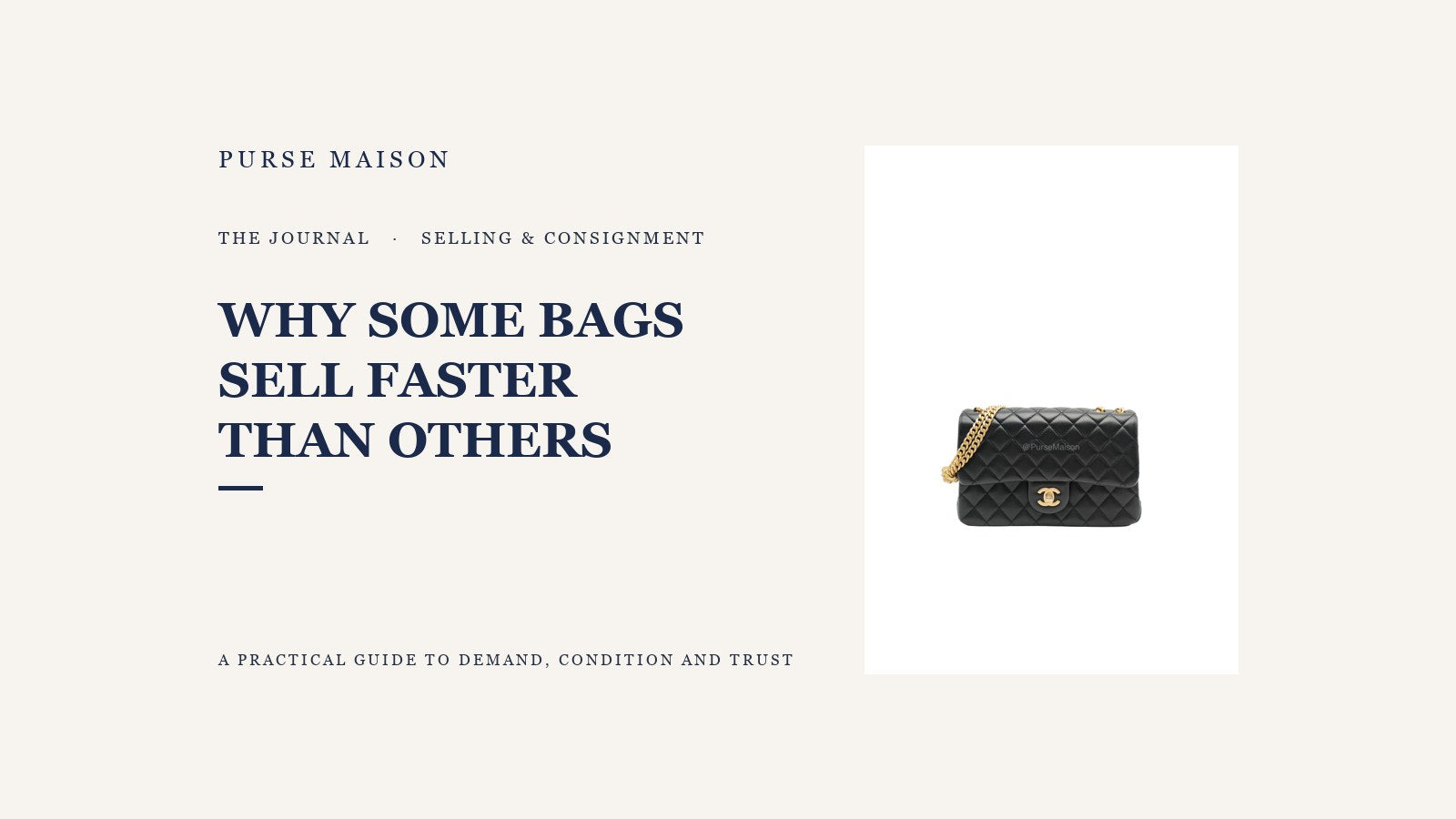
For a live comparison, a Chanel Classic Double Flap Medium, a Birkin 25 Retourne, and a Gucci Horsebit 1955 Mini represent different audiences and decisions. Their existence as live listings is not a claim that one is universally easier to sell.
Condition can outweigh the label
Condition is a commercial fact, not a footnote. Clean corners, handles, glazing, hardware, interior, shape, and odour can make a listing easier for a buyer to assess. Visible wear does not automatically disqualify an item, but it can narrow the audience, change the price discussion, or require a more detailed explanation.
Disclose repairs, alterations, stains, odour, edge wear, storage marks, and missing inclusions. The consignment workflow records each visible defect and inclusion, keeps the item unlisted while it is received-unverified or under an authentication hold, and requires the listing to match the approved grade. A flattering adjective is never a substitute for evidence.
Philippine climate adds a practical layer. Humidity can make storage and mould prevention important, especially when a bag has spent long periods in a closed cabinet or has been exposed to moisture. Provide the storage context you know. Do not clean, recolour, condition, or repair an item simply to make it appear more consignable without appropriate advice and authority.
Provenance supports trust, but paperwork is not a shortcut
Provenance is the story and evidence of how an item came to be owned. For consignment, the critical question is the owner’s right to consign and sell. Useful context can include purchase records when available, prior ownership information, repair records, and honest disclosure of anything unusual.
Documents help a specialist ask better questions. They do not independently prove authenticity. The editorial and consignment standards prohibit promising authenticity based on a receipt or a photograph alone. Professional review is recommended for high-value purchases, and any preliminary estimate remains provisional until physical inspection, authentication, condition grading, and approved terms are complete.

Liquidity means a credible path to a buyer
Liquidity is often used casually to mean “easy to sell.” A more careful meaning is the availability of buyers who can understand and act on the item without an excessive discount or long explanation. A recognisable model with a broad practical use case may have more potential buyers than a highly specialised novelty. That does not make it a guaranteed financial asset.
Liquidity can be affected by price band, colour, size, condition, completeness, season, and the channel in which the item is offered. A seller who needs a particular net amount may have fewer workable options than a seller who values a wider audience. The conversation should separate list price, markdown authority, consignor net or payout basis, fees or commission, and approved deductions.
Asking prices are signals of seller intent, not completed-sale evidence. A sensible assessment uses comparable identity and condition, not the highest visible number. Where evidence is thin, the responsible conclusion is qualified: the model may have an audience, but the specific item still needs a case-by-case review.
Seller expectations determine whether a good fit feels easy
An item can be suitable for consignment while the seller’s expectations are unsuitable. The consignment SOP says not to promise acceptance, authenticity, final price, sale time, or payout from photographs alone. It also requires approved terms covering price, markdown authority, fees and deductions, payout trigger, withdrawal, return, and unsold-item treatment.
Before submission, decide what matters most. Is the priority a careful route to market, a particular net expectation, a possible return by a known date, or simply clearing a piece you no longer use? These priorities may point to different choices. State them early so the assessment can identify constraints instead of creating a false sense of certainty.
A practical consignability checklist
- Identity: record the exact brand, model, size, colour, material, hardware, and identifiers you know.
- Condition: list wear, repairs, alterations, odour, storage concerns, and missing inclusions plainly.
- Provenance: confirm your ownership or right to consign and gather available records without treating them as a substitute for review.
- Demand: describe the use case and likely audience rather than relying on a broad brand reputation.
- Liquidity: separate list price, comparable asking evidence, expected net basis, fees, and deductions.
- Expectations: disclose your timing, target, and preferred outcome before terms are approved.
For more preparation, read what to prepare before consigning your bag, how a consignment price is set, why asking price is not sold price, and how to evaluate trust signals. You can also browse available pieces at Purse Maison to see how live listings identify a specific item. The examples are contextual, not promises about another bag.
The Purse Maison Verdict
The easiest items to consign are not defined by a universal brand ranking. They are specific, recognisable pieces with a plausible audience, honest condition, enough provenance to support a responsible review, and a price expectation that respects the difference between asking value and realised value. A less familiar model can still be appropriate when its audience and terms are clear.
If you are deciding whether to submit a bag, prepare the facts first and ask for a case-by-case assessment. Request a consignment assessment with the model details, condition notes, inclusions, available records, and your timing. The response should remain provisional until physical receipt, authentication, condition grading, and approved terms.
FAQ: Frequently asked questions
Which luxury brand is easiest to consign?
There is no responsible permanent ranking. Recognisability can help, but acceptance and saleability depend on the exact model, condition, provenance, demand, pricing, capacity, and agreed expectations.
Does a receipt make a bag easier to consign?
A receipt may provide useful context when available, but it is not independent proof of authenticity and does not replace ownership, physical inspection, authentication, or condition grading.
Are rare or limited bags easier to consign?
Not necessarily. Distinctiveness may attract a specialist audience, but a narrower audience can mean more explanation and more sensitivity to price. “Rare” should never be treated as a guarantee of liquidity.
What condition is acceptable for consignment?
Suitability is case-specific. Known wear, repairs, odour, alterations, and missing pieces should be disclosed. The item must be assessed and graded before a final listing decision and the listing must match that assessment.
Can Purse Maison tell me how long my bag will take to sell?
No responsible assessment can guarantee a sale date. Demand, price, condition, presentation, and buyer timing change. Any workflow targets or proposed terms should not be treated as promises unless approved in the applicable agreement.
Sources: Purse Maison Consignment Intake to Payout SOP; Purse Maison Blog Editorial System SOP; current Purse Maison product listings and collection pages, checked July 29, 2026.
Purse Maison is an independent luxury reseller and is not affiliated with or endorsed by the brands discussed unless expressly stated.

Leave a comment
This site is protected by hCaptcha and the hCaptcha Privacy Policy and Terms of Service apply.