
Consigning a Louis Vuitton Bag: What to Expect
Reviewed by Miss Jay-Ann · Purse Maison Editorial Team · Updated 18 July 2026 The same evidence and communication principles sit behind Purse Maison’s approach to trust before transaction.
Consigning a Louis Vuitton bag is not simply a matter of handing over a Neverfull, Speedy, or Alma and waiting for a sale. It is a shared process: you provide a clear account of the item and its history, while the consignee assesses, authenticates, presents, communicates, and accounts for the eventual transaction. Knowing the stages makes the handover calmer and helps you decide whether consignment is the right route for this particular bag.
This guide explains the process in customer-friendly terms, using Purse Maison's current consignment path and policy pages as the practical reference. Terms can change, so read the live pages and the agreement supplied for your item before committing.
First, choose the right selling route
Purse Maison presents both direct sale and consignment as options. A direct sale is a purchase by the business, while consignment means the item is offered to a buyer through Purse Maison and the consignor receives the agreed proceeds after a completed sale and applicable deductions. The right choice depends on your priority: immediate certainty, or a managed attempt to sell the item at a collaboratively discussed selling price.
That distinction matters for Louis Vuitton because a familiar model name does not remove the need to assess the actual piece. A Neverfull in one condition and material is not interchangeable with another. A Speedy with complete accessories may present differently from a bag with missing inclusions. An Alma's structure, corners, glazing, and hardware may call for a different conversation from a soft tote. The listing must describe the item in front of the team, not the ideal version in your memory.
Stage one: prepare the intake information
The current consignment FAQ asks owners to send detailed photos, a complete description, the brand, condition, inclusions, and any flaws. That first message is your opportunity to reduce uncertainty. Photograph the front, back, sides, base, handles, shoulder strap if present, interior, corners, hardware, date or microchip information if visible, and every inclusion you intend to send. Keep the images honest and well lit. A daylight photo that shows a stain is more useful than a heavily filtered photo that creates a surprise later.
- Name the model as accurately as you can, but do not guess a variant or material.
- Describe wear plainly: rubbing, marks, odour, stickiness, cracks, scratches, tarnish, or repairs.
- List inclusions separately, such as a strap, pouch, box, dust bag, receipt copy, or paper bag.
- Say what is missing. Completeness is useful information, not something to hide.
- Keep purchase records and prior service information available, while understanding that a receipt alone does not establish authenticity.

Stage two: initial assessment and authentication
After the initial photos and description, the team evaluates whether the item is suitable for the selling route. The public consignment FAQ says items that are fake or in poor, excessively worn condition may be declined. This is an initial assessment, not an invitation to self-authenticate from a photograph. No single feature independently proves authenticity. Details can vary by model, factory, and production period, and counterfeit techniques change.
For a high-value bag, professional authentication is recommended. The current Purse Maison pages describe authentication requirements and methods, including an upfront, non-refundable authentication fee for consigned items, with the applicable method depending on the item. Because fees and supported methods can change, confirm the current policy and the written agreement before sending the bag. Do not assume an old screenshot, a prior consignment, or a receipt settles the present terms.
If the item passes the relevant checks, the conversation can move forward. If it does not, the responsible outcome is a clear decline rather than a speculative listing. That protects buyers, consignors, and the integrity of the Journal's broader trust standard.
Stage three: agree on the listing position
The live policy says the selling price is determined collaboratively, taking market value and condition into account. Bring your preference, but expect a discussion rather than a promise. Asking prices on other websites are signals, not completed-sale evidence, and one unusually high listing does not establish what a buyer will pay.
A sensible conversation considers the actual model, material or finish as listed, visible wear, inclusions, current demand, and how the item compares with live inventory. The team may also discuss where an authentication fee sits in the final selling price and how the public listing should be positioned. Read the agreement carefully. Do not rely on a verbal assumption about fees, duration, pull-out conditions, layaway, or proceeds.
Stage four: send or bring the bag
Once the initial assessment and terms are clear, the FAQ describes two practical handover routes: schedule a pickup or bring the item to the showroom. Use secure packaging and retain a record of what you sent. If you are shipping, photograph the packed parcel and keep the tracking information. If you bring it in person, make sure the written inventory or acknowledgement matches the item and inclusions.
Do not add accessories at the last minute without recording them. A strap, pouch, or lock can affect how the item is presented and how the eventual handover is documented. The goal is a clean chain of information from your first message to the final listing.

Stage five: listing, communication, and sale
After handover and the required checks, the item can be photographed, described, and presented to prospective buyers. Good communication is two-way. Respond promptly if the team needs clarification, and ask for a written answer when a point affects your decision. Confirm how you will be notified of a sale, what happens if a buyer requests more information, and which current policy controls payment and pull-out requests.
The current policy describes a consignment display period and says it may be extended or reduced by mutual agreement. It also describes a lead time for processing payment after a sold item and lists payment methods. Treat those statements as current-page terms to confirm, not as a universal promise for every future consignment. A buyer's layaway request can also change when the consignor is paid, so ask how it applies to your item before agreeing.
Risks worth discussing before you sign
- Condition disagreement: undisclosed wear can delay listing or change the agreed position. Photograph flaws before handover.
- Authentication cost: current policy terms may require a fee whether or not the item sells. Confirm the amount, method, and refundability in writing.
- Early pull-out: the live policy describes conditions and a possible fee for an early withdrawal. Ask for the exact trigger and date calculation.
- Market timing: a familiar model can still take time to find its buyer. Avoid treating a listing date as a guaranteed sale date.
- Storage and liability: ask how the item is stored and what the agreement says about unforeseen loss or damage. Keep your own records and insurance decisions separate.
Philippine climate and storage between stages
Heat, humidity, sudden rain, and air-conditioning cycles make storage part of the selling conversation. Before pickup, keep the bag upright in a clean, dry, shaded room. Do not seal a damp bag in plastic, spray perfume or conditioner on it, or place leather directly against a coloured cloth that may transfer dye. Use the item's dust bag only when the bag is dry and the environment is suitable. Avoid prolonged sunlight and do not overfill a structured shape.
For a consignor, the practical rule is simple: do not attempt a last-minute home restoration to make the listing more attractive. Aggressive cleaning can create a new problem and may obscure the original condition. State what has happened to the bag, then let the team decide how it should be assessed and described. For a broader perspective on condition and selling choices, see brand-new versus preloved and long-term storage guidance.
Currently at Purse Maison
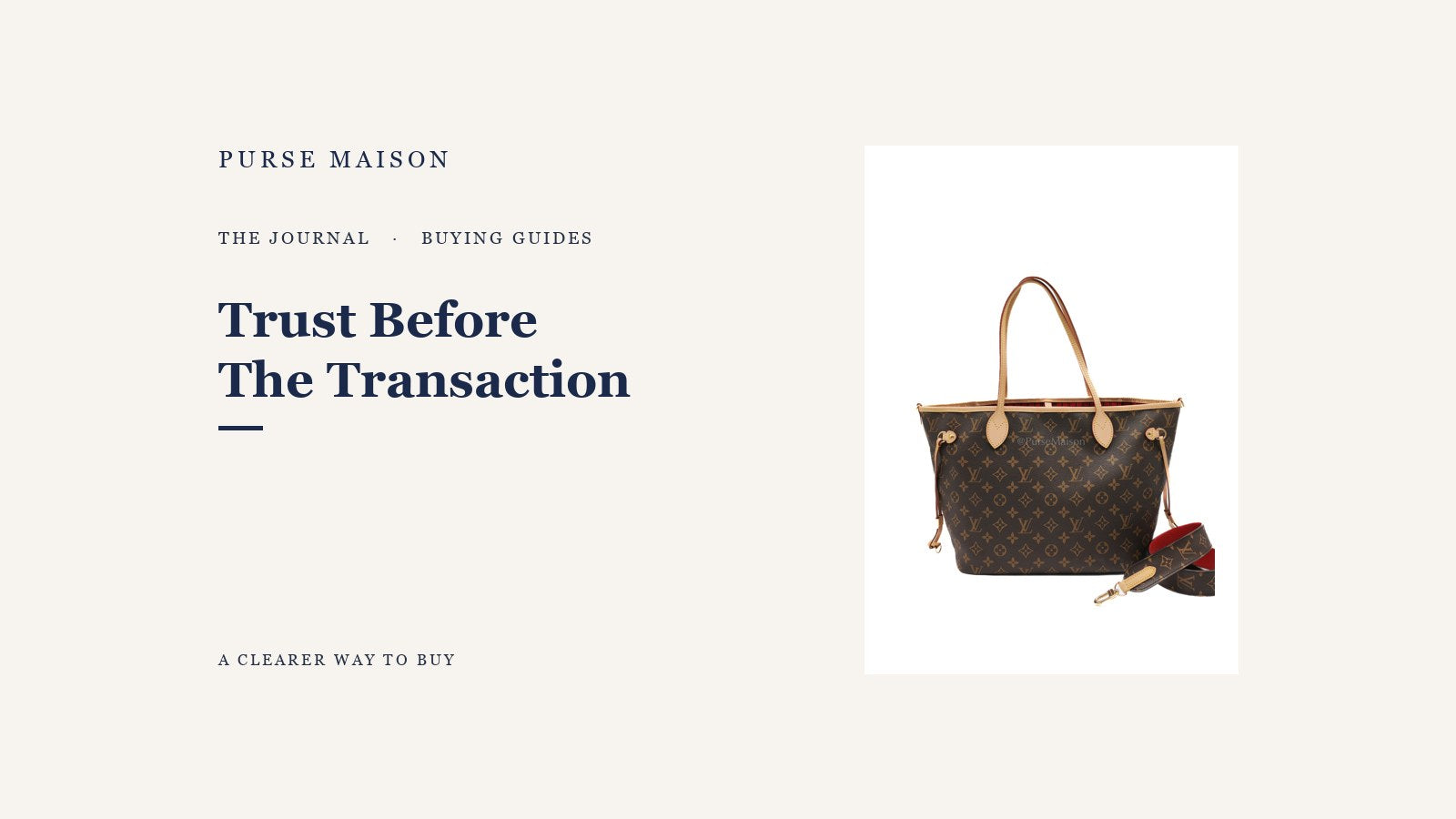
Live inventory changes, but recent listings illustrate the range a consignment conversation may need to distinguish. The Louis Vuitton Neverfull Bandouliere Inside Out MM, the Louis Vuitton Speedy 30, and the Louis Vuitton Alma BB are not interchangeable examples. Review the exact listing for its current condition, inclusions, and availability rather than relying on this article.

For a broader route, explore the Louis Vuitton collection. If you are ready to start, send the requested photos and description through Purse Maison's current consignment path, then review the written terms before handing over the bag.
The Purse Maison Verdict
Consignment is best approached as a documented partnership, not a guaranteed outcome. Prepare a truthful intake, let the item be assessed professionally, agree the listing position and applicable terms in writing, and keep communication open from handover through sale. That sequence is more valuable than trying to predict a result from the model name alone. If the current terms suit your priorities, the consignment path can give a Louis Vuitton bag a carefully managed route to its next owner.
FAQ: Consigning a Louis Vuitton bag
What should I send in my first message?
Send detailed photos, the model or best description you have, condition, inclusions, flaws, and any relevant history. Do not hide wear or guess details that you cannot verify.
Does a receipt prove that a Louis Vuitton bag is authentic?
No. A receipt can be useful context, but no single document or feature independently proves authenticity. Professional authentication is recommended for high-value purchases and consignments.
Can I choose the selling price?
The current policy describes a collaborative selling-price discussion based on market value and condition. Bring your target, but confirm the final position and every applicable deduction in the written agreement.
How long will payment take after a sale?
Payment terms are controlled by the current policy and agreement. The live policy describes a processing window after final sale, but confirm the applicable timing, payment method, and any layaway treatment for your specific item.
What happens if I change my mind?
Ask about pull-out terms before signing. The current policy describes conditions for early withdrawal, including a possible fee within the stated period. The written agreement is the authority for your consignment.
Sources: Purse Maison current Consign with Us, Consignment Policy, and live product pages checked 18 July 2026; Louis Vuitton model details remain subject to the individual listing and professional review.
Purse Maison is an independent luxury reseller and is not affiliated with or endorsed by Louis Vuitton.

Leave a comment
This site is protected by hCaptcha and the hCaptcha Privacy Policy and Terms of Service apply.