
How Purse Maison Evaluates and Presents a Preloved Bag
Reviewed by Miss Jay-Ann
A trustworthy preloved listing separates identity, observable condition, inclusions, and unresolved questions. It should help the buyer inspect the evidence without turning a description into an authentication guarantee or a promise about value.
Quick answer
A trustworthy preloved listing separates identity, observable condition, inclusions, and unresolved questions. It should help the buyer inspect the evidence without turning a description into an authentication guarantee or a promise about value.
What the decision is really about
This guide is built around a disciplined buyer or owner decision: define the role, inspect the exact item, separate fact from interpretation, and keep the conclusion proportional to the evidence. Current Purse Maison products below are item-level examples, not proof that every version behaves the same way.
Identity must be exact before description begins
A useful presentation starts with the exact item record: brand, model or product family where verified, size or measurements when verified, material, color, hardware, condition, and inclusions. Unknown details should stay unknown rather than being inferred from a familiar silhouette.
Photography should answer inspection questions
A complete view includes front, back, sides, base, handles, strap, opening, interior, corners, hardware, markings when appropriate, and notable wear. Consistent light and clear focus are more useful than dramatic editing that hides texture or color.
Condition language must point to evidence
Words such as excellent, good, or fair mean little without specific observations. State visible wear, structure, odor disclosures, inclusions, and known intervention in plain language. Separate what the photographs show from what requires in-person or professional assessment.
The listing is not an authentication guarantee
Identity records, documents, markings, and photographs can support evaluation, but no single feature independently proves authenticity. High-value purchases should use professional assessment and the current transaction protections available to the buyer.
Presentation should preserve decision freedom
A trusted listing makes trade-offs visible and gives the buyer enough information to ask better questions. It should not manufacture urgency, promise future value, or disguise an asking price as a completed-sale benchmark.
What not to infer from one listing
Do not infer a universal rule from one photograph, one asking price, one color, one influencer opinion, or one ownership story. Luxury goods vary by exact construction, material, condition, storage, intervention, market, and use. A current listing can support an inspection and comparison; it does not prove future value, universal durability, or the specifications of every version.
Protect the cash decision
Decide what amount can be committed without relying on a future sale, bonus, or market outcome. Include maintenance, storage, insurance where relevant, and the opportunity cost of keeping less cash available. If selling or consigning, distinguish the asking position, completed transaction, fees, taxes where applicable, and eventual net proceeds. A beautiful item should still fit the cash reality around it.
Condition is a sequence, not a label
Start with identity, then inspect the exterior, corners, base, handles, strap, hardware, opening, interior, odor, shape, inclusions, and known intervention. Ask whether each issue is cosmetic, structural, stable, or still unexplained. Clear photographs and factual descriptions reduce uncertainty; they do not remove the need to inspect the exact item when the stakes are high.
Philippine ownership context
Metro Manila adds heat, humidity, sudden rain, enclosed air-conditioning, and storage transitions. Keep bags dry, supported, and ventilated. Avoid leaving a luxury bag in a hot vehicle, overloading soft structures, or sealing a damp item in plastic. Follow material-specific guidance and pause for specialist advice when odor, mold, surface change, structural damage, or uncertain treatment history appears.
Questions to take to the listing
Ask for the exact identity, verified measurements when relevant, material or finish confirmation, condition details, included accessories, and known storage, treatment, or repair history. Start with the two or three unknowns that could make you walk away. Good questions create clarity without asking a listing to promise what it cannot prove.
Currently at Purse Maison
The examples below are current live inventory references checked on 2026-08-02. They may be same-brand or same-category context rather than the exact model discussed. Use each linked listing for the item-level record because availability, condition, and details can change.


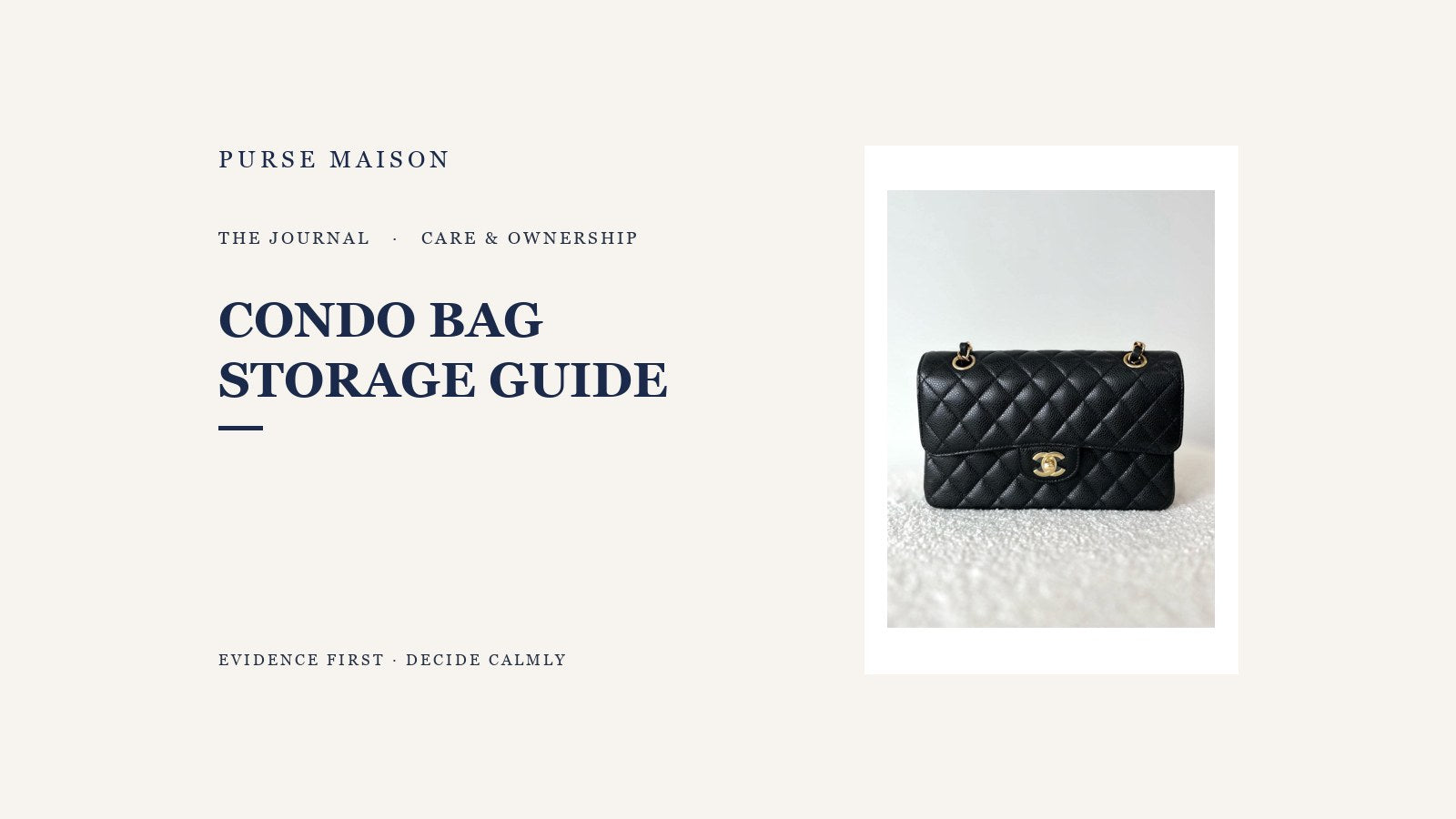
Explore the current Chanel Luxury Bags Price in the Philippines collection for available pieces and item-level details.
A practical checklist before committing
- Write down the job the bag must perform and the contents you actually carry.
- Confirm exact identity, measurements when relevant, material, color, hardware, condition, and inclusions.
- Ask one precise question for every unresolved photograph or description.
- Separate asking price from completed-sale evidence and never treat a luxury purchase as a guaranteed investment.
- Consider Manila storage, rain, humidity, maintenance, and cash opportunity cost.
Record the evidence before you commit
Save the exact listing URL, the photographs you relied on, condition observations, inclusions, questions asked, answers received, and current transaction terms. Protect personal and payment information. If a detail remains unknown, label it unknown rather than resolving it from memory. This record will not authenticate the item or guarantee a future outcome. It will make the reasoning easier to review and give a specialist clearer context if care, insurance, gifting, consignment, or resale becomes relevant later.
Review the decision after use
The first month of ownership is useful evidence. Notice whether the bag is comfortable, easy to access, appropriate for your routine, and cared for consistently. Record what changed rather than rewriting the original rationale. If the piece is not serving its role, investigate whether the issue is fit, condition, storage, load, or expectation. A calm review creates better future decisions than reacting to a single compliment, trend, or disappointing day.
Compare like with like
Keep identity, size, material, color, hardware, condition, inclusions, and carrying configuration visible as separate fields. A familiar family name can create false confidence if the exact piece has a different finish or history. Where two records are not directly comparable, say so. A narrower conclusion that matches the evidence is better than a confident ranking built on unlike examples.
Evidence worth saving
Save dated photographs, the current listing, written answers, and documents that genuinely belong to the item. Separate direct observation from interpretation. If a point would materially change the decision, leave it open until verified. The goal is not a perfect archive; it is an auditable record of the important evidence and uncertainty.
A decision worksheet you can use in the showroom
Bring a short written worksheet rather than relying on first impressions. Record the exact item identity, the role you expect it to perform, your normal contents, preferred carrying position, and the three condition details most likely to change your answer. Test access while standing and seated, note whether the bag remains comfortable when loaded, and compare the photographs with the physical piece where possible. Add a separate cash line for purchase, care, storage, and the amount of liquidity you would give up. Then mark every statement as observed, documented, interpreted, or still unknown. This method will not make the decision automatic, but it prevents prestige, urgency, and one attractive photograph from crowding out the evidence that matters.
When the sensible answer is to wait
Waiting is appropriate when identity is unclear, condition photographs are incomplete, a material claim is unsupported, the carrying role has not been tested, or the purchase would depend on a hoped-for resale outcome. It is also reasonable to wait when the exact version is not available and a same-brand example is doing too much work in your imagination. Use the pause to compare another listing, request clearer evidence, review the current transaction terms, or see a specialist. A delayed decision preserves cash and optionality. It also gives you a cleaner benchmark for recognizing a genuinely better fit rather than buying simply because the search has taken time.
The Purse Maison Verdict
The strongest decision survives ordinary ownership, not only the excitement of discovery. Choose the exact piece whose evidence is clear, role is useful, condition is understood, and trade-offs fit your cash and care reality. If a material detail remains unresolved, pause, ask, compare another listing, or seek qualified specialist advice.
FAQ
How do I know whether this fits my routine?
Write the role for the evaluation and presentation of a preloved bag, list the contents and access pattern, then compare them with the exact listing and an in-person test when possible.
Should I choose based on resale value?
No. Asking prices are not completed-sale evidence, outcomes vary, and luxury goods are not guaranteed financial investments.
What condition questions matter most?
Ask about corners, base, handles, strap, opening, hardware, interior, odor, shape, inclusions, and known intervention.
What should I confirm before paying?
Confirm exact identity, current condition, inclusions, transaction terms, seller information, and every unresolved detail that could change your decision.
Continue with Why Purse Maison Uses Relationship-Led Clienteling.
Continue with How to Remove and Prevent Mold on Luxury Bags.
Continue with How Provenance Adds Meaning to a Luxury Bag.
Sources and limits
Sources: Purse Maison Shopify Admin inventory and public listings checked 2026-08-02; Purse Maison Blog Editorial System SOP v1.7. Details that vary by edition, market, material, or date should be confirmed against current official specifications. Purse Maison is an independent luxury reseller and is not affiliated with or endorsed by the brands discussed unless expressly stated.

Leave a comment
This site is protected by hCaptcha and the hCaptcha Privacy Policy and Terms of Service apply.