
Should You Sell or Keep? A Framework for Deciding
“Should I sell or keep it?” is rarely a question about taste alone. It is a decision about use, condition, records, memory, opportunity cost and whether a realistic buyer is likely to understand the piece's current state.
A calm framework helps separate a bag's emotional meaning from its marketability. It also prevents a common mistake: treating a visible asking price elsewhere as a guaranteed outcome. A consignment assessment is an assessment, not a promise of a payout, timing or fee.
Step one: measure actual use
Look back at the last six to twelve months and count honest use, not planned use. When did you carry it? What stopped you? Was the reason capacity, comfort, weather, dress code, condition anxiety or simple preference?
Keep the bag if it reliably serves a role or gives you meaningful pleasure that you would miss. Consider selling if it duplicates a stronger option and has become a storage obligation. Low use alone is not a command to sell. It is a prompt to understand the reason.

Step two: separate condition from sentiment
Write a neutral condition record. Include corners, handles, edges, hardware, lining, odor, stains, repairs, alterations and any missing accessories. Use clear photographs taken in consistent light. Do not soften a defect because you love the bag, and do not exaggerate it because you are ready to move on.
Condition affects how a specialist can present and assess a piece. A buyer may accept wear when it is accurately described, while an undisclosed issue creates friction later. If the bag needs treatment, ask whether professional care is sensible before consigning. A repair can change appearance, cost and disclosure, so it should not be assumed to improve the result.

Step three: gather documentation without overstating it
Collect what you have: purchase or ownership records, authenticity-related documentation, dust bag, box, strap, receipts and repair records. Record what is absent. Documentation can help a specialist understand provenance and inclusions, but no single paper replaces a professional review of the actual item.
Use the exact model description from the listing or your records. Do not infer a date, material, size or code from memory. If a detail is uncertain, label it for verification. This is especially important when comparing a bag with other listings.
Step four: calculate opportunity cost honestly
Opportunity cost is not a forecast of what the bag will earn. It is the practical value of the space, attention and capital tied up in an item you do not use. Ask what would improve if you kept it: access to a sentimental object, a future occasion, or a useful backup. Ask what would improve if you sold: less storage pressure, a clearer collection, or funds redirected to a defined priority.
Do not use invented payout figures. Net proceeds depend on the item's assessment, channel terms and eventual transaction, all of which must be confirmed for the specific case. Asking prices are not completed-sale values.

Step five: test realistic marketability
Marketability is the meeting point between the model, condition, completeness, documentation, presentation and current demand. A recognizable name does not guarantee a quick sale. A less obvious piece may still suit a particular buyer when its condition and description are strong.
Before consigning, compare your bag with current, not imagined, alternatives. Then ask the receiving specialist what information they need, how the item will be described, and which terms apply. Avoid relying on a generic promise about timing, fees or payout. Those are case-specific and should be confirmed in writing.
Keep, consign, or pause
Keep when the bag has meaningful use, a clear role or substantial sentimental value, and the storage burden is acceptable.
Consign when use is low, the role is duplicated, the condition and records can be represented accurately, and you are comfortable with the channel's confirmed terms.
Pause when grief, urgency, incomplete records or uncertainty about condition is driving the decision. A short cooling-off period can protect against a sale you later regret.
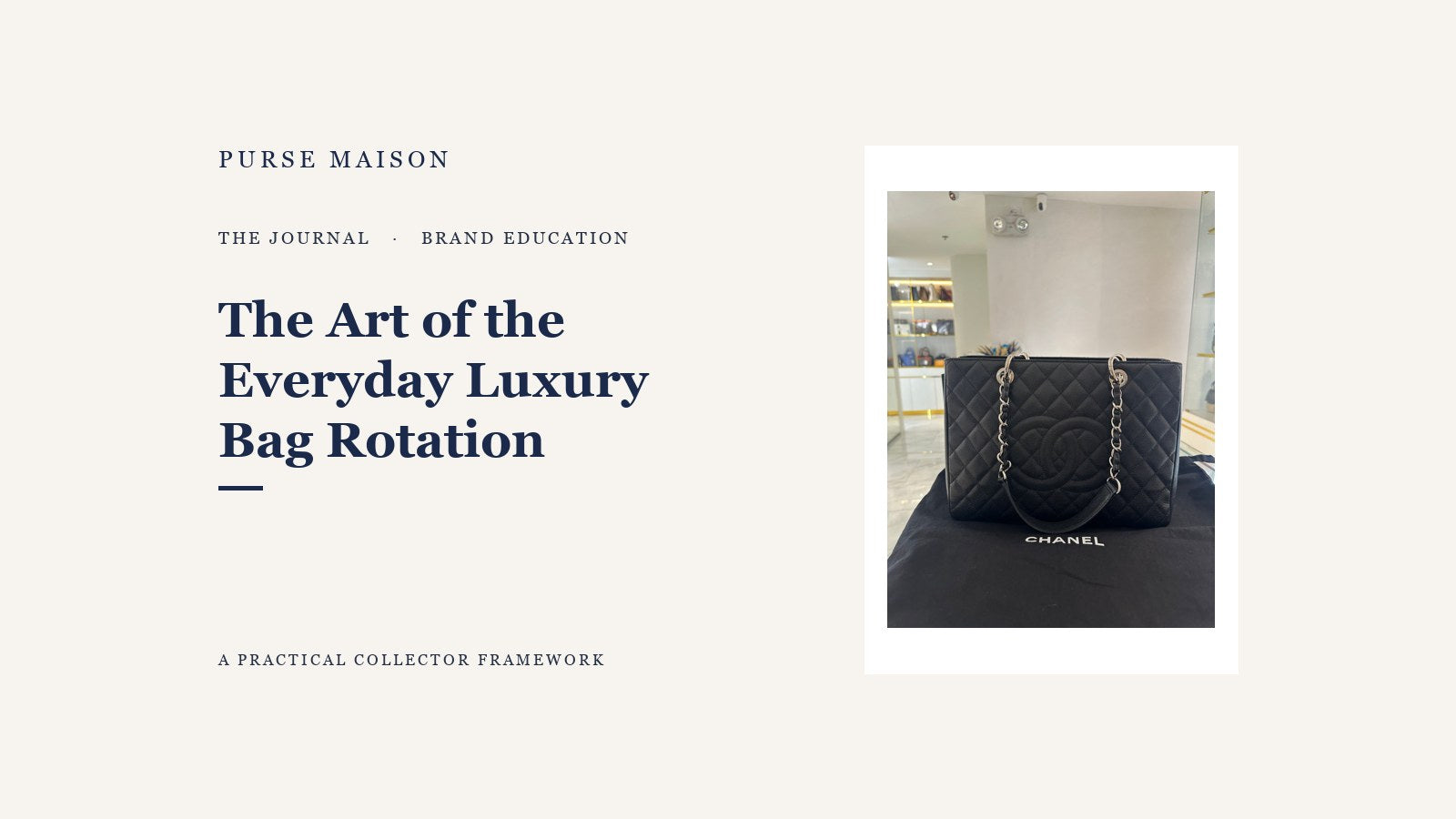
Read how long a luxury bag can take to sell, how a consignment price is set, and what to prepare before consigning your bag. You can also explore the Chanel collection or review a live Chanel grand shopping tote listing to see how a current item is described.
A consignment conversation should answer specific questions
When the framework points toward selling, prepare for a conversation rather than a verdict. Bring the bag in the condition in which it would be assessed, together with the documentation and accessories you actually have. Make a written list of repairs, storage issues, odors, stains, replacements or alterations. A clear record protects both the owner and the receiving specialist from assumptions.
Ask how the item will be described, which condition details will be disclosed, and which terms govern the relationship. Confirm the applicable fee structure, any costs, the expected communication points, and what happens if the item is not sold. These details belong to the specific agreement. They should never be replaced by a generic online estimate or a promise that a bag will sell within a particular period.
Ask what happens if the specialist needs more information or if a detail in the description changes after review. If documentation is incomplete, ask what can be verified and what will remain qualified. The right language is precise: a record may support the case, but it does not independently establish every fact about the item.
Finally, decide whether the process suits your emotional timeline. Consignment requires patience and comfort with a market outcome that may differ from an asking price seen elsewhere. If you need immediate certainty, or if the bag carries unresolved sentimental weight, pausing may be wiser than signing quickly. A good decision is one you can explain after the first emotion has passed.
The aim is not to maximize a hypothetical number. It is to make a transparent, informed choice about an item that has a real condition, a real history and a real audience.
Keep your own decision record. Note the date, the questions you asked, the information supplied and the terms you confirmed. This does not predict an outcome, but it makes the choice auditable and reduces the temptation to rebuild the decision from memory later. It is particularly useful when more than one family member has an opinion about the bag.
For a sentimental piece, consider a middle path: keep it for a defined period, use it once in a meaningful setting, and revisit the decision with fresh evidence. A pause is a valid outcome when the facts are incomplete.
Clarity is the practical result. You may keep the bag with confidence, consign it with realistic expectations, or pause without guilt until the evidence and your feelings agree.
Take one final practical step: decide what outcome would make you feel the process was handled well, independent of a number. It might be an accurate description, a respectful return, or a cleaner collection. Naming that outcome keeps the decision aligned with your priorities.
Take one final practical step: decide what outcome would make you feel the process was handled well, independent of a number. It might be an accurate description, a respectful return, or a cleaner collection. Naming that outcome keeps the decision aligned with your priorities.
The Purse Maison Verdict
A strong collector decision is specific, reversible where possible, and grounded in how the bag will actually be used. Choose a rotation that earns its place through frequency, function and condition stewardship. If a piece repeatedly fails those tests, a thoughtful sale or consignment conversation can be more useful than another purchase.
Frequently Asked Questions
How many bags should a practical rotation contain?
There is no responsible universal number. Start with the occasions you genuinely have, then add only when a new bag solves a distinct problem rather than repeating an existing role.
Does a higher price make a bag better for daily use?
No. Price does not determine weather suitability, capacity, comfort or your willingness to use the piece. Judge those separately.
Should I keep a bag because it may be valuable later?
Future value is uncertain. Keep it for use, meaning or a clearly documented collecting purpose, not a promise of appreciation.
What should I do before selling?
Record the bag's condition, inclusions, purchase or ownership records, and any repair history. Ask the receiving specialist which evidence is needed and how changing market conditions affect the assessment.
Can I store bags in a Philippine condo?
Yes, with a clean, dry, stable storage area, adequate airflow and regular condition checks. Avoid treating a closet as automatically safe from humidity.
A considered next step
If you are ready to move from reflection to a case-specific assessment, prepare the condition notes and documentation first, then contact Purse Maison to discuss whether consignment is appropriate.
Purse Maison is an independent luxury reseller and is not affiliated with or endorsed by the brands discussed unless expressly stated.
Reviewed by Miss Jay-Ann

Leave a comment
This site is protected by hCaptcha and the hCaptcha Privacy Policy and Terms of Service apply.