
Why Client Memory Matters in Luxury Service
Reviewed by Miss Jay-Ann
The best luxury service does not make a client repeat the same decision from the beginning every time. It remembers enough context to make the next conversation easier, then checks whether that context is still true. That sounds simple, but the difference between helpful memory and uncomfortable surveillance is substantial.
Quick answer. Client memory matters because luxury decisions are personal, infrequent, and detail-heavy. Remembering a preferred size, intended use, colour boundary, or reason for waiting can reduce friction and improve relevance. It should never become a licence to assume, pressure, or collect information without a clear purpose and appropriate consent.
Memory is context, not a profile for its own sake
A service conversation can produce many details, but not every detail deserves to be retained. Useful memory is the small amount of context that helps a client make a better decision later.
- Preference memory: brands, silhouettes, sizes, colours, materials, hardware, and practical dislikes that the client has actually expressed.
- Decision memory: why a client is considering a purchase, what trade-off matters, what they rejected, or what would make the timing right.
- Use memory: whether the item is for commuting, travel, a formal event, daily errands, a gift, or a collection.
- Care context: practical conditions such as frequent rain, humid storage, a busy commute, or a preference for lower-maintenance materials.
- Permission memory: what the client has agreed may be used for future assistance, and what should not be used or retained.
The final category is as important as the first four. Memory without boundaries is not refined service. It is an information habit. A client should be able to change a preference, correct a misunderstanding, ask for less personalisation, or decline future contact without having to justify the decision.
Why repetition weakens an otherwise personal experience
Luxury purchases involve more uncertainty than an ordinary repeat transaction. A buyer may be comparing size, condition, colour, price, and long-term usefulness at once. A consignor may be deciding whether to release an item with sentimental value. A returning client may already have explained the relevant background in a previous conversation.
When a service interaction ignores that context, the client carries the full cost of repetition. They must restate the same budget, explain the same lifestyle, or defend the same preference. The result can feel transactional even when the advisor is polite. Good memory removes unnecessary work so that the next conversation can focus on what has changed.
Memory also improves the quality of a recommendation. "You like black bags" is a weak note. "You prefer a compact shoulder bag for dinners, want room for a phone and cardholder, and do not want a delicate finish for rainy-season use" is a decision-ready brief. The second version is still limited to service-relevant context. It does not require a speculative biography.

Good memory reduces pressure instead of increasing it
There is a poor version of personalisation in which every remembered detail becomes a reason to send another recommendation. That approach confuses relevance with frequency. A client who once asked about a particular model has not necessarily asked to receive every similar item, every price change, or every new arrival.
A better standard is proportionality. Use memory when it clearly helps the current question. If the client said they were waiting for a particular occasion, the advisor can ask whether the timing has changed before presenting options. If the client rejected a size because it was uncomfortable, do not quietly return to the same size merely because the colour is attractive. If a previous preference is uncertain, ask rather than infer.
Personalisation should also preserve the right to say no. An advisor can explain why an item may fit the stated brief, then leave room for the client to decline. The aim is not to turn knowledge into leverage. It is to make the client feel understood while keeping the decision theirs.
Specific inventory shows why broad labels are not enough
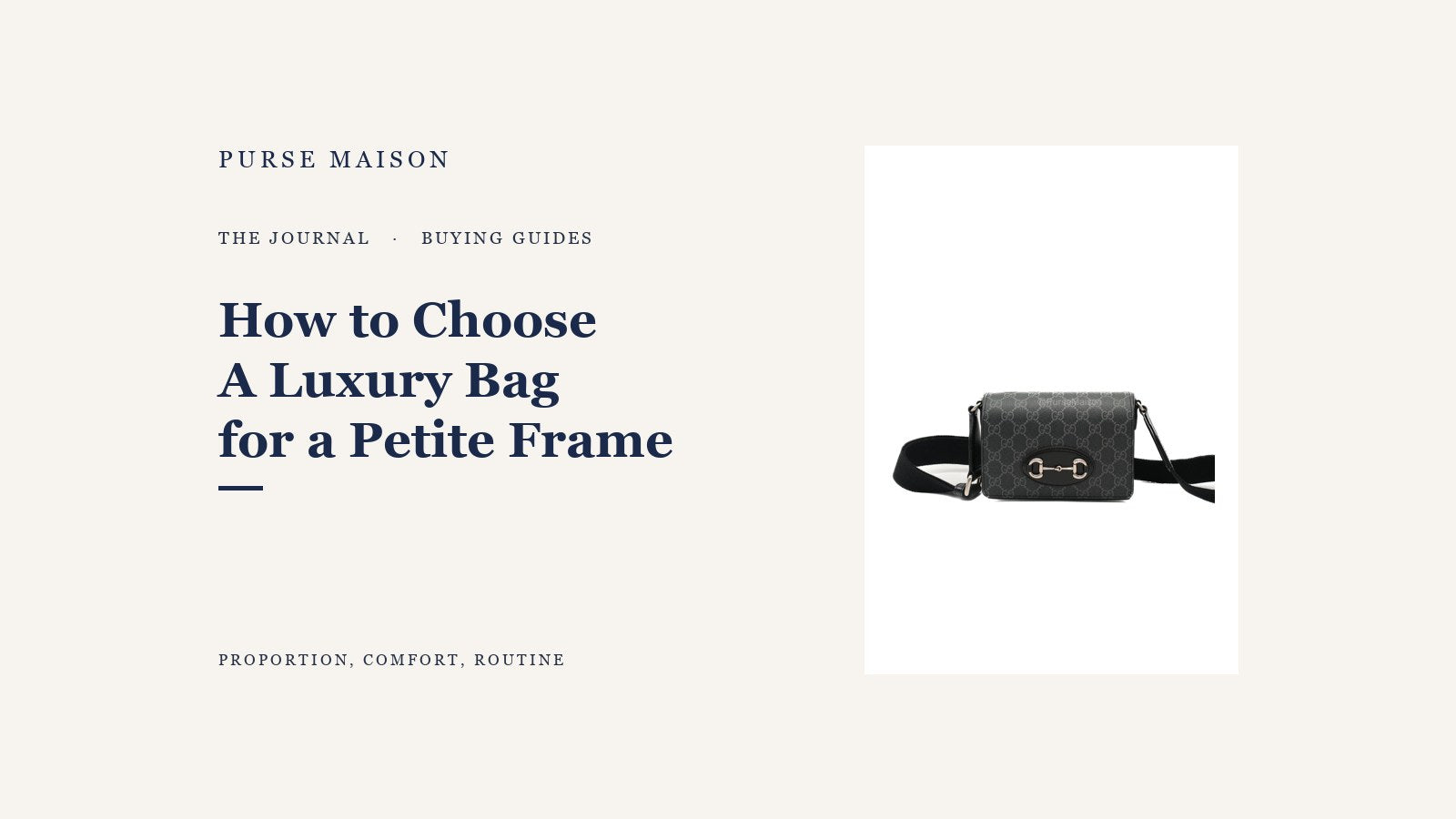
Recent Purse Maison inventory, checked on 30 July 2026, included a Gucci Horsebit 1955 Mini Shoulder Bag in black GG Supreme coated canvas, a Chanel Curvy Mood Hobo Bag in black quilted calfskin leather with aged gold hardware, and a Chanel Le Boy Old Medium in black quilted caviar leather with aged gold hardware. Those exact listings illustrate why a service conversation should retain the shape of a need rather than only a brand name.
A client might care about a small shoulder profile, a softer hobo construction, a structured medium format, a particular finish, or how a piece will behave in a humid commute. The listings are not evidence of what any individual client prefers, and no client behaviour is inferred from them. They are simply concrete examples of the differences a careful advisor would ask about before recommending an item.

Memory must be accurate, revisable, and private
In the Philippines, Republic Act No. 10173 defines consent as a freely given, specific, and informed indication of a person's will. The law also describes principles including specified and legitimate purposes, fair and lawful processing, accuracy and relevance, and information that is adequate rather than excessive. This article is an editorial guide, not legal advice, but the service lesson is clear: collecting more personal detail is not automatically better service.
A respectful memory practice has four safeguards:
- Explain the purpose. Tell the client why a detail would help, such as matching future inventory to a stated size or intended use.
- Keep the note narrow. Record the preference that supports the service decision, not unrelated personal history.
- Let the client correct it. Preferences change. A record that cannot be updated will eventually create bad recommendations.
- Respect boundaries. A client can decline personalisation, withdraw permission, or choose a one-time interaction.
Accuracy is not only a data-quality concern. It is a relationship concern. An incorrect note can make a client feel unseen even when the advisor is trying to be attentive. Asking, "Is that still what you are looking for?" is often more elegant than pretending the old answer is permanent.
A practical five-question memory framework
Any luxury service team can use a short framework without claiming to know more than the client has said:
- What are you trying to solve? Start with the occasion, use, or selling decision.
- What have you already ruled out? A rejection can be more valuable than a generic like.
- Which trade-off matters most? Capacity, lightness, structure, condition, colour, price, or availability may lead the decision.
- What should remain flexible? A client may have one firm boundary and several acceptable alternatives.
- May we use this context for a future recommendation? Ask in plain language and make the answer meaningful.
The framework creates a better handoff too. If one advisor is unavailable, the next person can begin with the client's stated goal instead of forcing a fresh discovery exercise. A handoff should still be transparent. The client should know what context is being used and have a chance to correct it.
Memory can improve the experience after the purchase
Service memory is not limited to selling. It can make ownership guidance more useful when it recalls how the item will be used. A buyer who travels often may need different storage and packing advice from someone who keeps a bag for occasional events. A client in a humid environment may benefit from a conversation about ventilation, moisture, and avoiding rushed cleaning decisions. These are general care principles, not promises about a particular seller's process.
After a consignment conversation, the same principle applies to the seller's priorities. The relevant context may be the desired timing, the importance of inclusions, the difference between an asking price and net proceeds, or a preference for a particular selling route. Remembering those priorities helps keep future communication focused. It does not justify guaranteeing a price, a sale date, or an outcome.

Readers can use the live available collection as a practical exercise: choose one item and write the five questions that would need an answer before a recommendation could be genuinely personal. The point is not to receive more messages. The point is to receive fewer, better-matched conversations.
FAQ: Questions clients ask about service memory
What kind of client memory is genuinely useful?
Remember details that change the decision: intended use, acceptable size, colour or material boundaries, budget range, timing, and what the client has already rejected. Keep the note relevant, accurate, and easy to update.
How can memory improve service without feeling intrusive?
Use it only when it helps the current question, explain the purpose, and ask before relying on an old assumption. Personalisation should reduce repetition and improve relevance, not increase contact frequency or pressure.
Should a client be able to correct a remembered preference?
Yes. Preferences change, and a client may have been misunderstood. A simple check-in such as "Is that still your preference?" protects both accuracy and trust.
Does a first-time client benefit from memory?
Even one thoughtful conversation can clarify the real decision. The service provider does not need a long history. It needs permission to retain only the context that is useful and appropriate for the next step.
How can a shopper evaluate whether a luxury service is respectful?
Notice whether the advisor listens before recommending, remembers the stated constraints without exaggerating familiarity, explains why a suggestion fits, accepts a no, and is clear about how personal information is handled. A polished tone is not a substitute for those behaviours.
The Purse Maison verdict
Client memory matters because it turns a sequence of transactions into a more coherent service relationship. The strongest version is selective, consent-aware, and humble about uncertainty. It remembers what helps, checks what may have changed, and leaves the client in control. That is enough to make a luxury interaction feel personal without pretending that a business owns the client's story.
For general education only. Purse Maison is an independent luxury reseller and is not affiliated with or endorsed by the brands discussed unless expressly stated. This article does not describe a proprietary Purse Maison CRM, response-time standard, customer statistic, or internal clienteling process. Data-protection requirements can vary by context; seek qualified advice for a specific legal question.
Sources: Salesforce, State of the AI Connected Customer, accessed 30 July 2026; Republic Act No. 10173, Data Privacy Act of 2012, accessed 30 July 2026; live Purse Maison Shopify inventory snapshot, accessed 30 July 2026.
For related reading, see what happens after you buy from Purse Maison, why some bags sell faster than others, and how to buy a luxury bag as an OFW buying from abroad.

Leave a comment
This site is protected by hCaptcha and the hCaptcha Privacy Policy and Terms of Service apply.