
Meet Miss Jay-Ann: Making Luxury Safer and More Personal
Quick answer: Luxury feels safer and more personal when the person guiding the purchase makes the decision easier to understand rather than trying to make it faster. Miss Jay-Ann’s public role at Purse Maison is closely tied to that human layer: listening carefully, making room for questions, and helping a client judge whether a piece fits real life.
Reviewed by Miss Jay-Ann
The trust problem behind a high-value purchase
Buying a preloved luxury bag is not only a product decision. The client is also assessing the listing, the condition language, the communication, the evidence available, and what will happen after payment. A polished photo is not a substitute for clear answers. A confident tone is not a substitute for an honest boundary.
That is why a recognisable human face matters—but only when the experience behind that face is consistent with the promise. Personal service should make the evidence easier to see, not ask the client to trust personality instead of evidence.
What “safer” should mean
Safer does not mean risk-free and it does not mean a single feature can settle every question. It means the client can understand the condition, provenance information that is actually available, the limits of what photos show, and the next questions worth asking. It also means the client is not pushed past a concern simply because the item is scarce.
In a showroom or a careful remote conversation, the advisor can slow down the decision: compare the use case, point out trade-offs, and direct the client to the live listing rather than paraphrasing changeable details from memory.

The personal layer: listening before recommending
Personalisation begins with practical questions. Where will the bag be carried? Does the client prefer hands-free access? Is the piece for daily use, travel, formal occasions, or a collection? How much maintenance is realistic in the Philippine climate? What does the client already own, and what gap is the purchase meant to fill?
Those questions are not a performance. They prevent a common failure in luxury retail: recommending a culturally popular silhouette that does not suit the client’s proportions, routine, storage, or tolerance for care.
What a client can expect from Miss Jay-Ann’s public-facing role
The useful expectation is not a promise of a particular outcome. It is a more personal conversation around the client’s priorities, with explanations that stay grounded in the actual listing. When a piece is not a fit, saying so protects the relationship. When a detail needs verification, the responsible answer is to verify it or label it unknown.
That standard also protects the client from false familiarity. A warm interaction should never become permission to invent customer stories, imply private access, or expose another person’s preferences.

Current pieces are examples, not pressure
Currently at Purse Maison
Current inventory changes quickly because each preloved piece is unique. These examples are included to show how the guide can be applied to real listings; they are not a promise that the exact item will remain available.
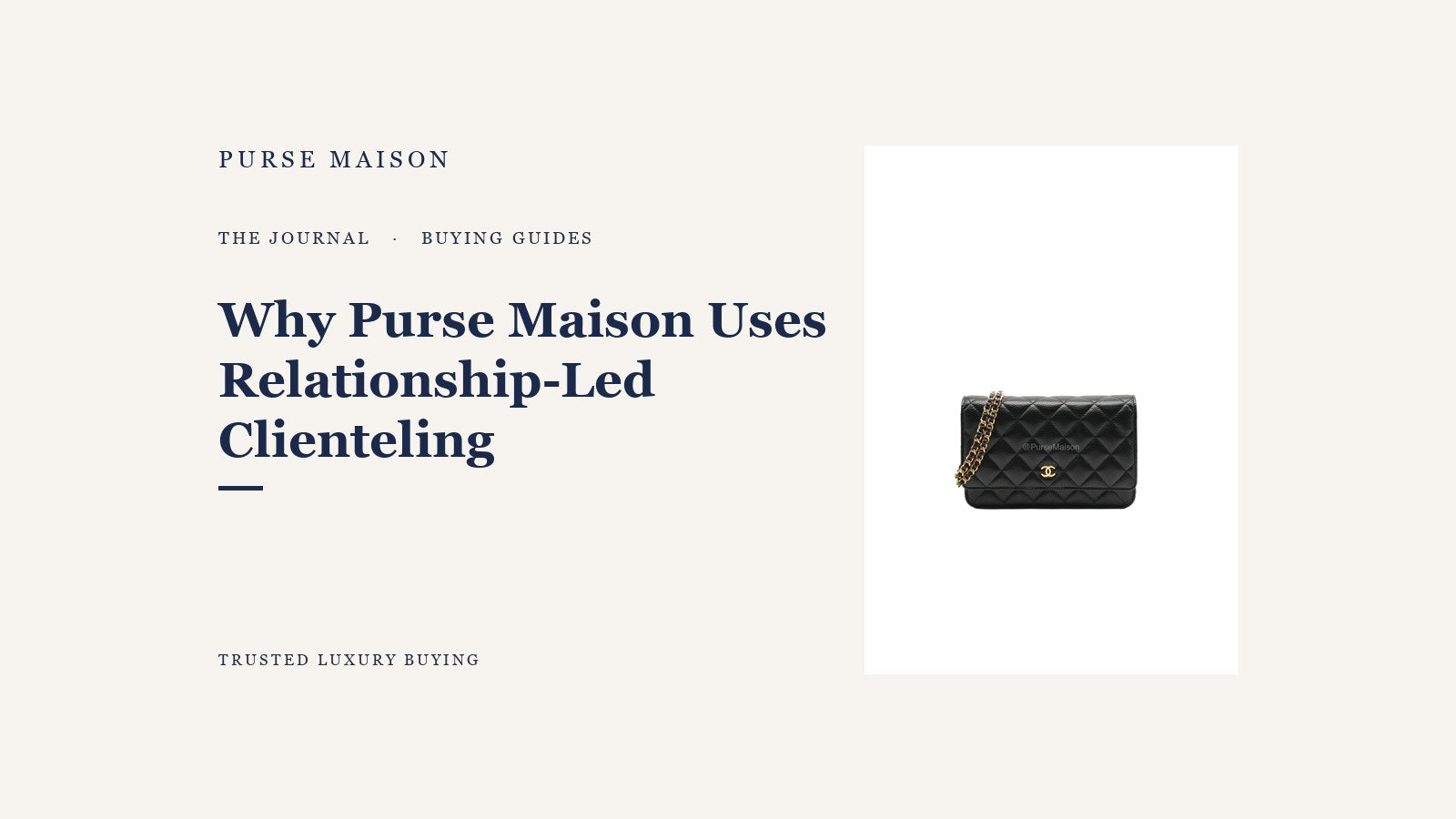
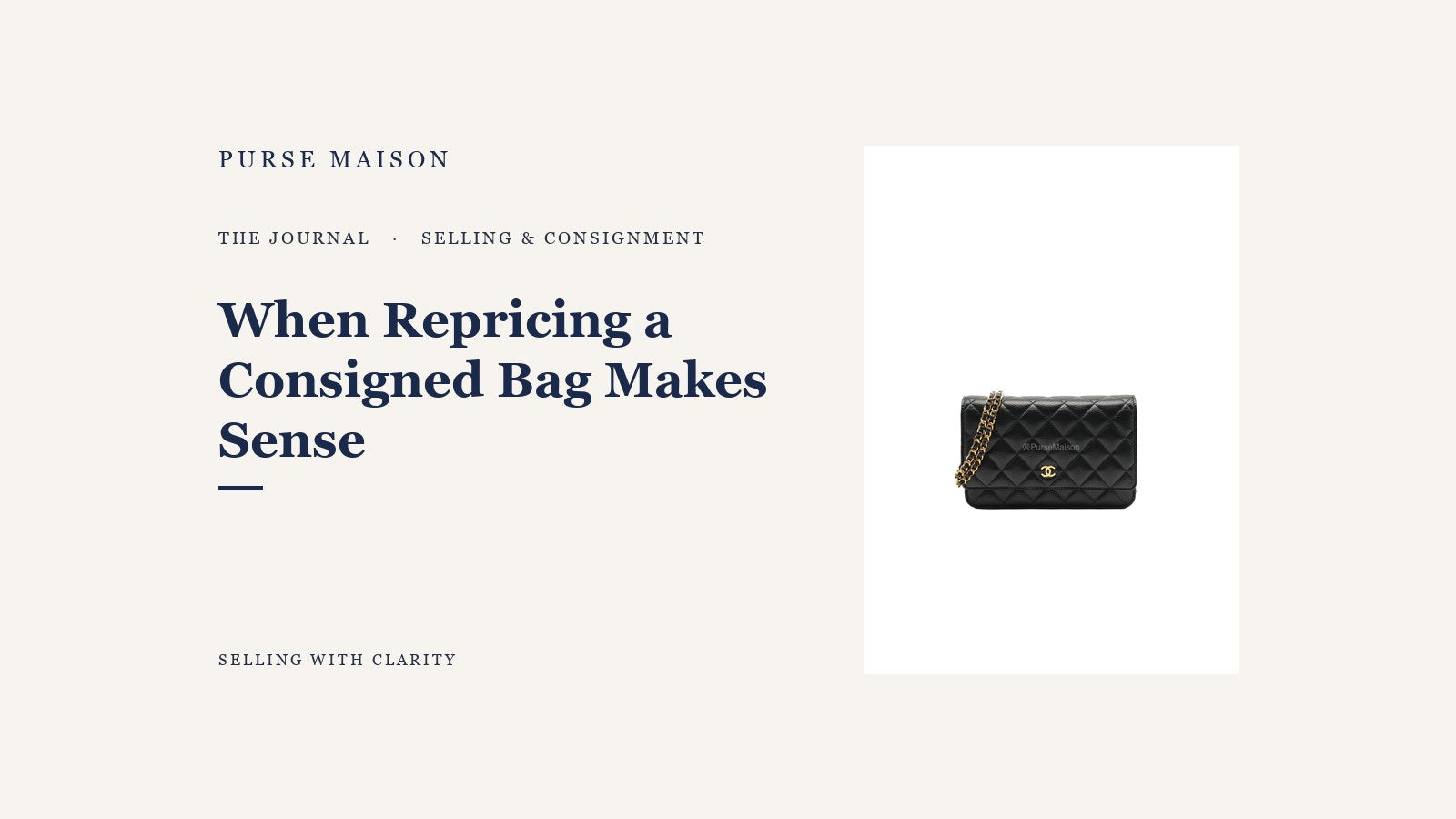
- Chanel Classic Wallet on Chain (WOC) in Black Caviar Leather Gold Hardware Series 30 — review the live listing for the current condition, inclusions, and availability.
- Gucci Horsebit Mini 1955 Canvas Navy Blue Crossbody Bag — review the live listing for the current condition, inclusions, and availability.
- Gucci Mini Dome in Teal Microguccissima Leather Shoulder Bag — review the live listing for the current condition, inclusions, and availability.
Use the available collection as a changing set of examples. The right question is not “Which item is most impressive?” but “Which item solves the client’s stated problem with the fewest compromises?”
Making the experience practical in the Philippines
Personal service should account for actual local routines: commuting, humid weather, indoor air-conditioning, sudden rain, and the reality that storage may be a cabinet rather than a dedicated dressing room. A recommendation that ignores those variables is less personal, even if it sounds luxurious.
The same is true after the purchase. A client should know where to find the live listing, what condition and inclusions were stated, and who to contact when a question arises. Clarity after the sale is part of trust before the sale.
The Purse Maison verdict
Miss Jay-Ann’s value as the public face of Purse Maison is strongest when warmth and evidence reinforce each other. The goal is not to replace the client’s judgment. It is to help the client use it: ask better questions, see the trade-offs, and choose—or wait—with confidence that is earned rather than manufactured.
A decision worksheet for the owner
Before making a decision, write down the one outcome that matters most and the compromise you are willing to accept. This prevents a polished image, a familiar name, or a moment of scarcity from taking over the whole evaluation. A useful worksheet separates what is known from what is assumed. Record the exact listing title, the condition points that matter, the questions still unanswered, and the reason this item fits the intended use. If the reason cannot be stated clearly, waiting is a legitimate decision.
Next, compare the piece with your real routine rather than an imagined version of it. Think about how you move through a normal week, where the item will be stored, how often it will be used, and what maintenance you will realistically perform. Philippine weather is part of that calculation: heat, rain, humidity, and air-conditioning can affect comfort and care habits. The aim is not to make the decision fearful. It is to make the ownership cost visible before the purchase or handoff.
Use the live listing as the current record. Read the exact model name, images, condition description, inclusions, and availability. If a detail is not stated, treat it as unknown and ask for clarification. Do not replace an unanswered question with a general statement about the brand or model. In preloved luxury, the individual item is the evidence. A general guide can frame the questions, but it cannot quietly fill the gaps.
Then test the strongest alternative. For a buying decision, compare one smaller or simpler option and one more flexible option. For a care decision, compare prevention with professional advice. For a consignment decision, compare a revised presentation with a price change, and separate the owner’s timing from the buyer’s response. The point is not to manufacture a winner. It is to show which trade-off you are choosing and why.
Finally, make the next step reversible where possible. Ask for one more close-up, arrange a careful inspection, confirm the current terms, or save the listing and return to it after a pause. A high-value decision should survive a night of reflection. If the answer becomes weaker when urgency is removed, that is useful information—not a missed opportunity.
Personal service is strongest when it leaves an evidence trail the client can understand: the listing reviewed, the questions answered, and the points that still need confirmation. That is more valuable than a dramatic assurance. It also makes the experience less dependent on memory. A client can take time, revisit the information, and ask a follow-up without having to reconstruct the whole conversation.
The public face and the operating system should reinforce each other. Warmth invites the question; disciplined information answers it. When those two layers agree, the client does not have to choose between a personal experience and a careful one.
Questions before committing
The personal layer is also measured by what happens when the answer is not immediate. A careful “let me verify that” protects the client better than a fast guess. Over time, those small moments teach the client that questions are welcome and that a pause is part of good service.
One final check is to ask whether the decision still makes sense if the item is not available tomorrow. If the answer is yes, the fit is probably grounded in the owner’s needs. If the answer is no, urgency may be doing more work than evidence. A calm process leaves room for another suitable piece to appear.
That pause is not anti-commerce. It is how a luxury purchase, care choice, or consignment decision becomes part of a longer relationship with the object. The reader should leave with a practical next action and a clear understanding of what remains unknown.
FAQ
What makes a luxury purchase feel safer?
Clear listing information, careful answers, visible limits, time to decide, and a channel for follow-up questions all help. No single sentence can remove every risk.
Why does the advisor need to ask about lifestyle?
A beautiful bag can still be a poor purchase if its carry method, access, maintenance, or size does not match the owner’s routine.
Does a personal relationship replace authentication or evidence?
No. Personal service should make evidence easier to understand; it should never substitute for appropriate professional checks.
What should I do if I feel pressured?
Pause, ask for the concern to be addressed in writing, and give yourself permission to wait. A good advisor should respect that.
purse maisons approach to trust before transaction what happens after you buy from purse maison why client memory matters in luxury serviceSources: official brand guidance and current Purse Maison inventory evidence were checked for this article; reseller sources were used only for internal orientation and are not named or linked here.
Purse Maison is an independent luxury reseller and is not affiliated with or endorsed by the brands discussed unless expressly stated.

Leave a comment
This site is protected by hCaptcha and the hCaptcha Privacy Policy and Terms of Service apply.